The Bill That Named Two Companies
The French National Assembly's vote of 14 March 2024 introduced a per-item levy and an advertising ban aimed at businesses releasing garments above defined frequency thresholds. Neither Shein nor Temu appears in the statutory text, but both were named in the parliamentary debate and the thresholds were drawn to match their release cadence.

Adopted at first reading on 14 March 2024: a per-item levy, a cap at half the sale price, and a ban on advertising.
Photo: National Assembly building ruins · Wikimedia CommonsA law written around two businesses that do not appear in it
On 14 March 2024 the French National Assembly voted to approve a set of measures targeting what the parliamentary record describes as "ultra-fast fashion" — a category defined not by brand name but by release cadence and price point. The statute introduces an eco-score levy, a per-item charge scaled to a product's environmental rating, and an advertising prohibition that applies to any business meeting the volume and frequency thresholds written into the text. Neither Shein nor Temu is named anywhere in that text. Both were named repeatedly in the debate that preceded the vote.
The legislative architecture was deliberate. France was not writing a sanctions list; it was writing a definition, one calibrated precisely enough that only a small number of businesses would fall inside it. The thresholds — not yet fully codified in secondary legislation as of mid-2025 — were drawn to capture the release cadence associated with on-demand micro-batch production, the model under which Shein operates by releasing thousands of new styles per day rather than the hundreds associated with conventional fast fashion. By setting the frequency bar at that level, the Assembly created a law that targets a business practice without legislating against the specific companies that perfected it.
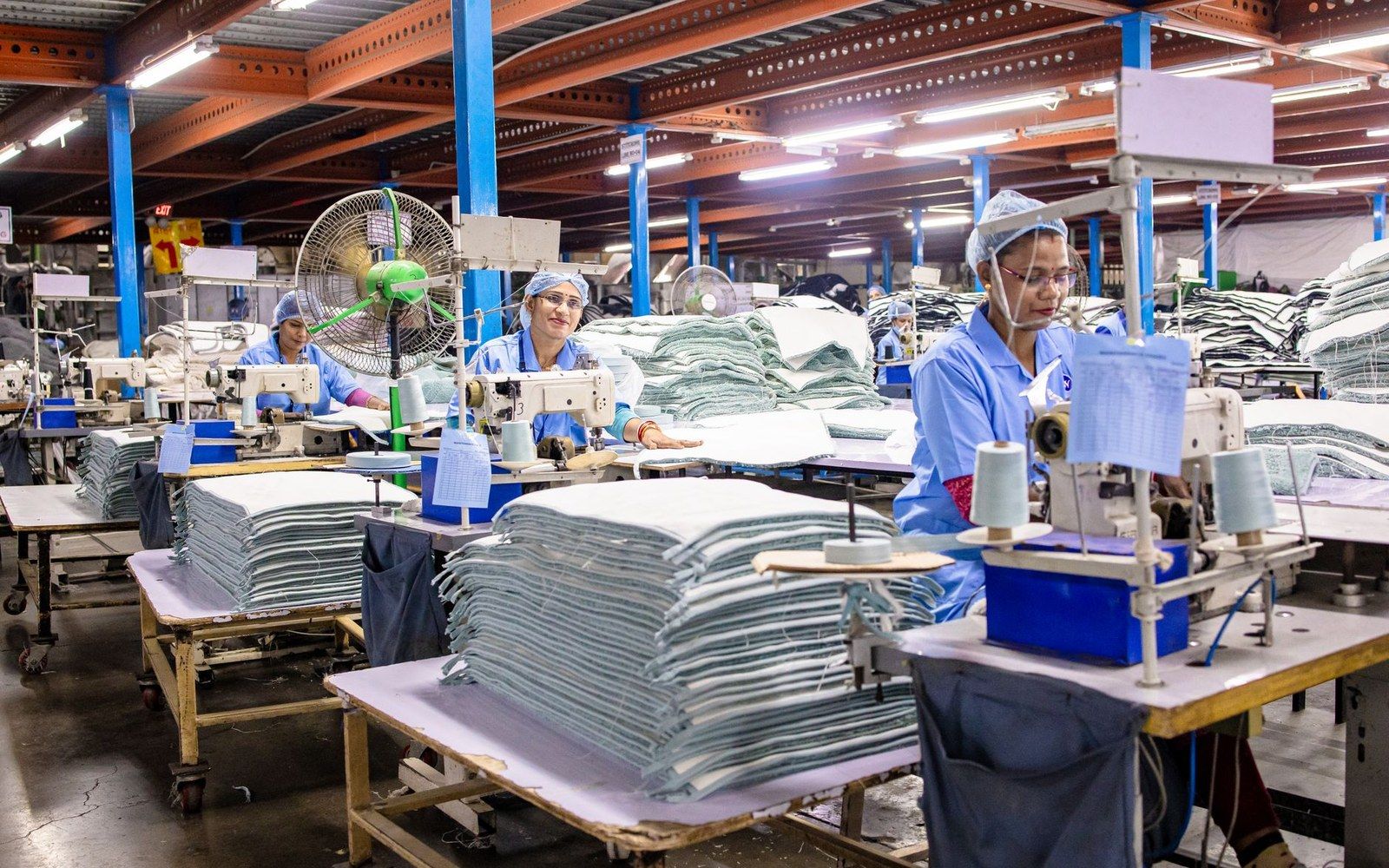
Assembly stitching at a garment unit. The frequency thresholds in the French text are written against the release cadence a floor like this can sustain.
Photo: EqualStock IN / PexelsThat approach has a practical logic. A named-company statute invites immediate legal challenge on proportionality grounds and becomes obsolete whenever a company restructures, rebrands, or moves its legal domicile. A threshold-based statute, in principle, catches any present or future operator that meets the criteria and is enforceable without continuous legislative revision. The drawback is that thresholds require precise secondary legislation, and that precision is exactly what was still pending when this article was prepared.
What the legislation actually provides
The eco-score levy is the centrepiece. The charge is applied per item, with the rate varying according to an environmental score that accounts for factors including carbon emissions, water use, microfibre shedding, and the presence of hazardous chemicals. The maximum levy was initially discussed at five euros per item, with a legislative intent to raise it to ten euros per item by 2030. For a business selling garments at two or three euros — a price point Shein has routinely offered on its platform — a five-euro surcharge is not a marginal cost adjustment; it is a structural challenge to the entire pricing proposition.
Key provisions
- Eco-score levy — per-item charge scaled to environmental rating; initial maximum discussed at €5, rising to €10 by 2030
- Advertising ban — applies to businesses meeting the volume/frequency threshold; covers paid search, social media, qualifying influencer arrangements
- Environmental labelling — mandatory disclosure requirement to accompany the levy
- Implementing decrees — the precise thresholds (SKU count, release frequency, price floor) were still pending in final form as of mid-2025
The advertising prohibition operates alongside the levy. Businesses meeting the volume threshold would be barred from placing commercial advertising in France: no paid search, no social-media promotion, no influencer arrangements qualifying as paid promotion under French advertising law. This is significant because both Shein and Temu rely disproportionately on digital advertising spend, particularly on platforms popular with younger consumers, to acquire customers. An advertising blackout in France would not close either company's operations there, but it would alter the economics of serving the French market in ways a modest per-item charge alone might not.
The combined design — make the product more expensive and make it invisible in the ad marketplace — reflects a legislative theory that ultra-fast fashion's consumer base is acquired primarily through price and platform visibility rather than brand loyalty. If that theory is right, the measures are coherent. If it is wrong, and a meaningful portion of that consumer base is genuinely indifferent to advertising and price-sensitive enough to absorb the levy, the measures underperform.

A domestic machine and a bench: the cheapest intervention anywhere in the chain.
Photo: Gustavo Fring / PexelsThe bill also contemplates mandatory environmental labelling that would accompany the eco-score, a provision that connects it conceptually to the European Commission's digital product passport framework under Regulation (EU) 2024/1781, even though the French legislation operates under national rather than EU authority. France has form here: it was among the earliest member states to legislate on extended producer responsibility for textiles, and its separate collection infrastructure predates the EU's January 2025 mandatory-collection requirement under the revised Waste Framework Directive.
What the vote did not settle
The parliamentary vote of 14 March 2024 was a significant moment, but it was not the moment the law took effect. The specific thresholds defining which businesses fall within scope — the precise number of SKUs, the release frequency, the price floor — require implementing decrees that move through the French regulatory process separately from the Assembly vote. As of mid-2025 those decrees had not been published in final form, which means the practical enforceability of the levy and advertising ban remained in abeyance.
That gap between legislative intent and regulatory implementation is common in complex consumer and environmental legislation, but it is particularly consequential here because the businesses the law is designed to reach are fast-moving in a quite literal sense. Shein's SKU count — the published estimates of which range from two thousand to ten thousand new styles per day depending on method and period — is a moving target. The company has reorganised its corporate structure in preparation for a capital markets transaction, and it has at various points made public commitments on supply-chain transparency and environmental improvement that, if credible, would in time reduce its exposure under any score-based environmental levy. Temu, which entered European markets at scale from 2023 onward, presents a different profile: its model is marketplace rather than manufacturer, which may affect how the levy is applied at the point of customs entry versus the point of sale.
The advertising ban raises its own enforcement questions. Influencer marketing in particular sits in a legal grey zone across most European jurisdictions. France's Autorité de régulation professionnelle de la publicité (ARPP) has issued guidance on influencer commercial disclosures, but the line between organic content and paid promotion is contested in practice, and enforcement against offshore platforms operating accounts based outside France has historically been uneven.
The broader question is whether a single member state can materially reshape the economics of global ultra-fast fashion through national legislation, or whether that outcome requires coordinated EU-level action. The European Commission's ongoing work on the Ecodesign for Sustainable Products Regulation and the Green Claims Directive moves in the same direction but on a longer legislative timeline. France has enacted something earlier and more specific; whether that specificity proves an advantage or an enforcement liability depends on the implementing decrees that still have to be written.
What the 14 March 2024 vote unambiguously accomplished was naming, in the record of a sovereign parliament, the business model that legislators across Europe are attempting to regulate. The statute does not say Shein. The debate absolutely did.
Chronology
- 14 March 2024French National Assembly votes to approve the ultra-fast fashion measures
- 18 July 2024EU Ecodesign Regulation (EU) 2024/1781 enters into force, providing for the digital product passport framework
- 1 January 2025EU separate textile collection requirement takes effect under revised Waste Framework Directive
- Mid-2025French implementing decrees defining thresholds not yet published in final form
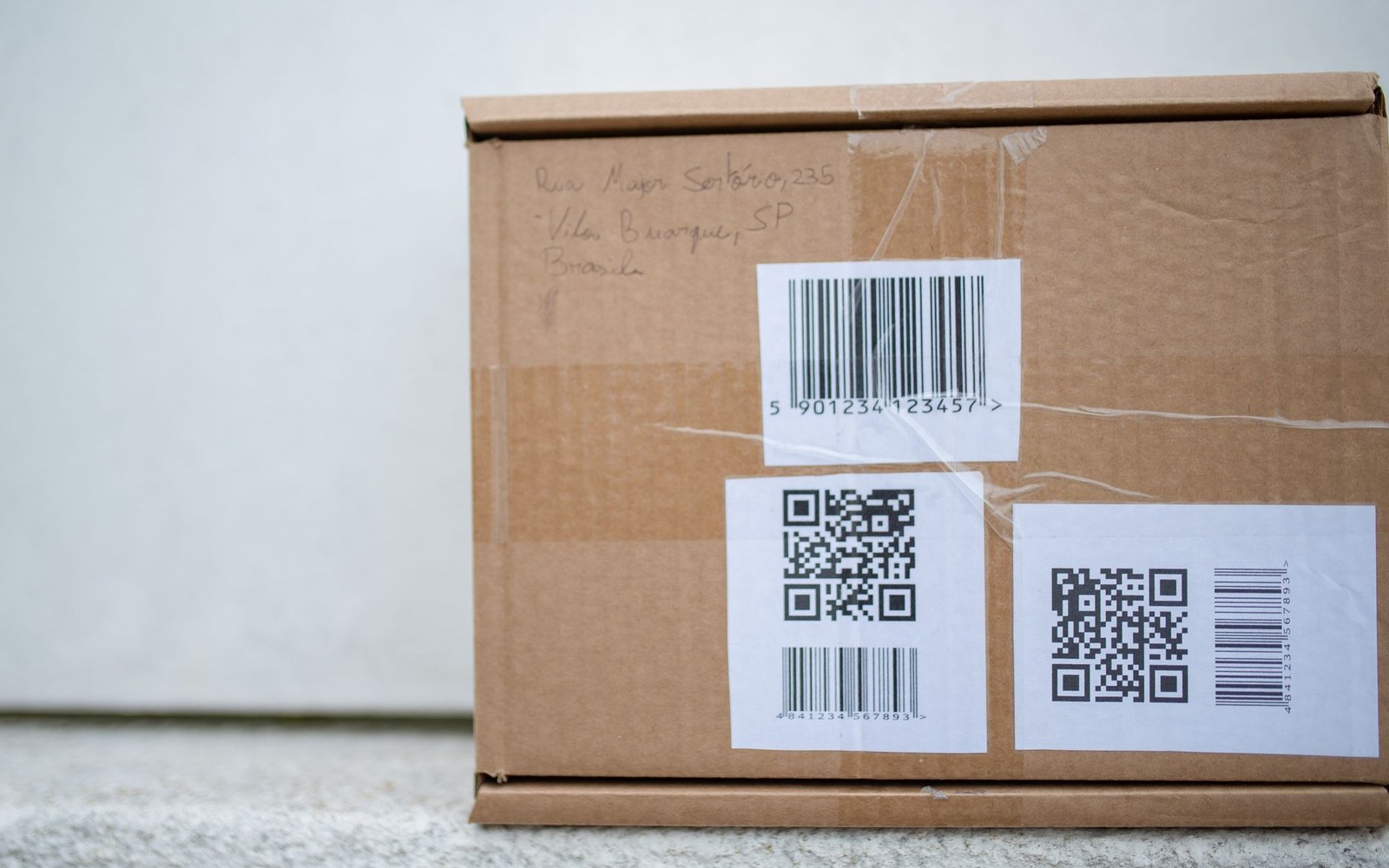
Barcode and QR stickers on an inbound parcel. The digital product passport has to carry more than this, and fit on the garment’s own label.
Photo: Kampus Production / Pexels