Temu Arrived With the Largest Advertising Budget Anyone Had Seen
The platform could afford to lose money on customer acquisition because every parcel under $800 entered the United States duty-free.

Temu entered the United States in September 2022 and bought Super Bowl advertising in 2023 and again in 2024.
Photo: Kampus Production / PexelsThe Spend and the Subsidy Behind It
When Temu launched in the United States in September 2022, its parent company PDD Holdings began purchasing digital advertising at a scale that unsettled established players. By early 2023 the platform had become one of the largest buyers of Meta inventory in the world, and at Super Bowl LVII in February 2023 it ran multiple spots — an unusual commitment for a marketplace that had existed for less than six months. Estimates from advertising-tracking firms placed Temu's US digital ad spend in 2023 at over a billion dollars; Meta's own earnings commentary in that year acknowledged the outsized contribution of Chinese-headquartered e-commerce platforms to its advertising revenue.
The economics underneath that spend depended on a structural advantage: the de minimis exemption, which until 2 May 2025 allowed parcels valued under $800 to enter the United States without duty or formal customs entry. Temu's model — individual low-value items shipped directly from Chinese manufacturers to American consumers — was engineered around that threshold. Duties that a conventional importer would have absorbed into unit cost simply did not apply. That gap funded the headroom to acquire customers at a loss and discount aggressively.

The advertising ban reaches promotion, not the shelf.
Photo: Jahra Tasfia Reza / PexelsThe same mechanism operated in Europe under the EU's €150 customs exemption, which the European Commission moved to close as part of a broader customs reform package it advanced through 2023 and 2024. The Commission's own impact assessment, published alongside the reform proposal, estimated that around 2.3 billion low-value parcels entered the EU in 2023, the majority originating in China, with Temu and Shein identified as primary volume drivers.
The advertising logic was straightforward: if the regulatory subsidy makes each incremental sale cheap enough, the correct strategy is to buy market share aggressively before the rules change. Temu's arrival in Western markets coincided with intensifying legislative scrutiny of exactly the exemption it relied on. The US Executive Order signed in April 2025, which eliminated de minimis treatment for Chinese-origin goods effective 2 May 2025, directly targeted the parcel-shipping model that Temu and Shein had industrialised.
How durably the unit economics hold after that date remains open. Temu had, by late 2024, begun recruiting US-based sellers to fulfil domestically — an acknowledgement that the original model's cost base was contingent, not structural. The advertising budgets that shocked the industry in 2023 were, in part, a race to embed consumer habits before the window closed.
The money and the rule
- Temu's US launch — September 2022
- Super Bowl LVII ad slots — February 2023
- Estimated 2023 US digital ad spend — over $1 billion (advertising-tracking firm estimates)
- US de minimis threshold — $800 per parcel, eliminated for Chinese-origin goods from 2 May 2025
- EU low-value customs exemption threshold — €150
- EU low-value parcel volume — approximately 2.3 billion parcels in 2023 (European Commission estimate)
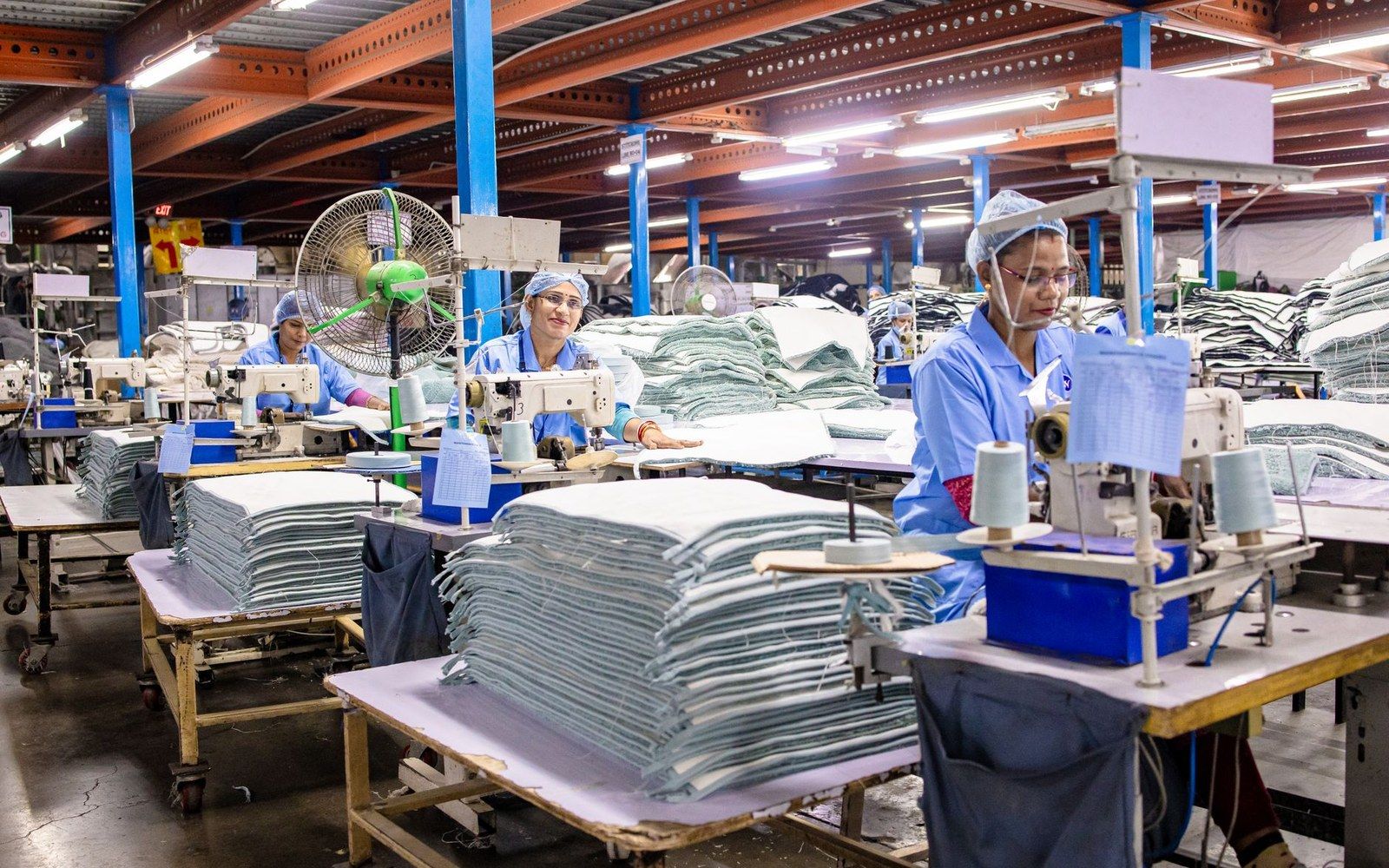
Assembly stitching at a garment unit. The frequency thresholds in the French text are written against the release cadence a floor like this can sustain.
Photo: EqualStock IN / Pexels