The Fashion Act, Still a Bill
New York's Fashion Sustainability and Social Accountability Act has been introduced in three consecutive legislative sessions. It has not passed any of them.
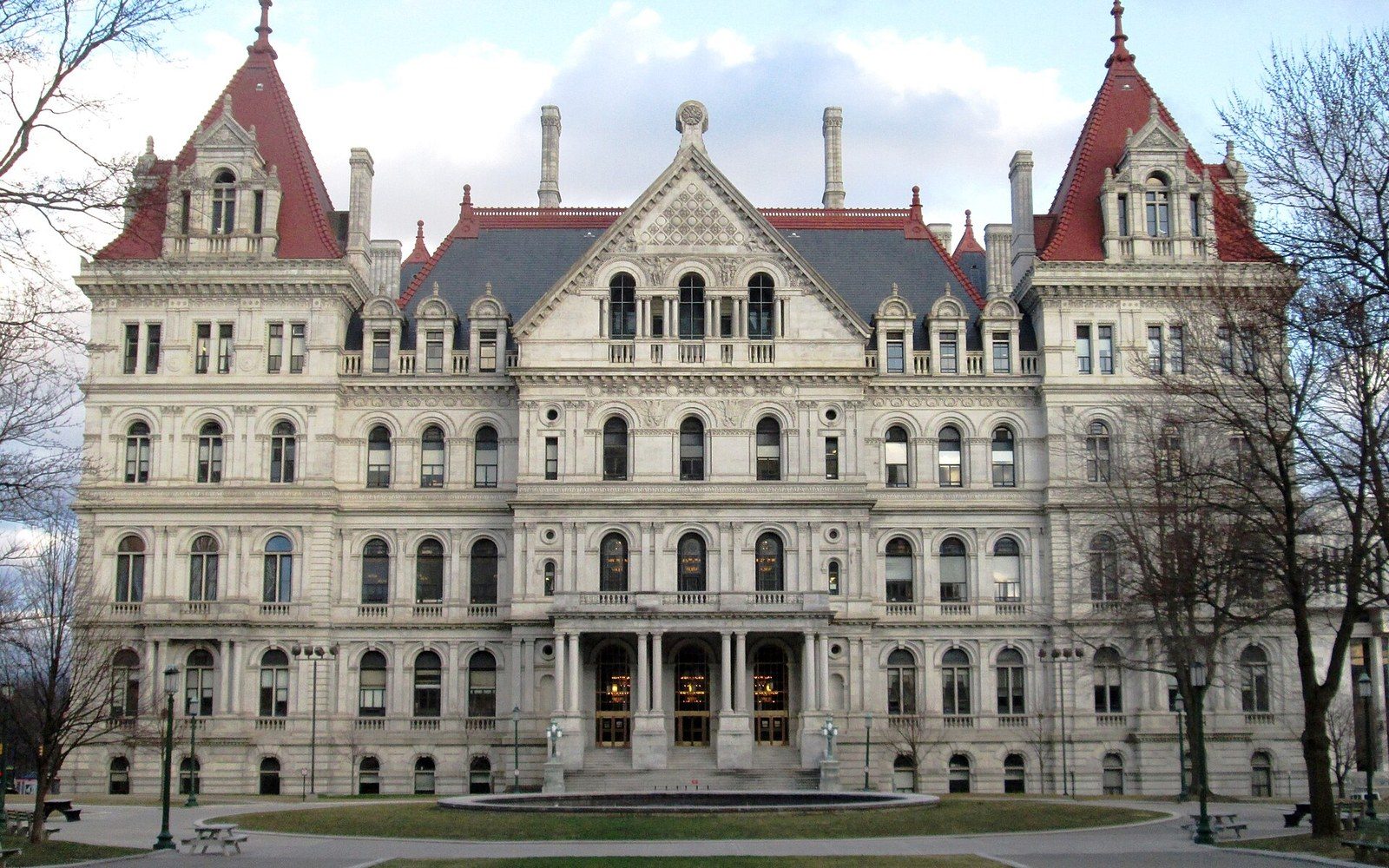
Introduced in Albany in 2022, and still pending after three legislative sessions.
Photo: 2019 New York State Capitol northwest facade, Albany, New York · Wikimedia CommonsWhat the Bill Requires, and Who It Catches
First introduced in the New York State Legislature in 2022, the Fashion Sustainability and Social Accountability Act — commonly called the Fashion Act — targets apparel and footwear companies with annual global revenues above $100 million that do business in New York. The threshold is designed to capture the largest players while exempting smaller labels.
Companies caught by the bill would be required to map at least 50 percent of their supply chain by volume, disclose social and environmental due diligence policies, and publish data on greenhouse gas emissions across their value chain. They would also need to set science-based targets for emissions reduction. The bill text was reintroduced in the 2023–24 session as Senate Bill S4746, with the CFDA and New York State Senators among its backers. Companion legislation has been introduced in the Assembly in each cycle.

A domestic machine and a bench: the cheapest intervention anywhere in the chain.
Photo: Gustavo Fring / PexelsThe bill's sponsors have pointed to New York's position as a major market and sourcing hub to argue that legislation there would carry de facto weight beyond state lines — compelling multinationals, including those headquartered in Europe or Hong Kong, to comply or exit a lucrative retail market. Critics, including some industry groups, have raised concerns about compliance costs and data availability, particularly for brands whose supply chains extend into Bangladesh and other multi-tier manufacturing countries where traceability infrastructure is thin.
The bill has cleared committee hearings but has not reached a floor vote in the Senate or Assembly in any session since 2022. As of the 2024–25 legislative session it remains pending. Its scope and disclosure architecture have influenced parallel discussions in Brussels — the European Commission's supply-chain due diligence framework covers comparable ground at the EU level — but the New York bill itself has no enacted equivalent in any US state.
Whether the Fashion Act passes or stalls again, its revenue threshold and supply-chain mapping requirements have already shaped how the debate over mandatory disclosure is framed in US policy circles.
Key thresholds
The advertising ban reaches promotion, not the shelf.
Photo: Jahra Tasfia Reza / Pexels