Four Rules, Four Dates, and One Compliance Calendar
The EU's textile regulatory sequence is not a single law but a ladder of obligations, each rung with its own instrument, its own deadline, and its own mechanism for enforcement.

Four instruments, four dates: ecodesign, collection, producer responsibility, green claims.
Photo: Willians Huerta / PexelsThe Architecture of the Sequence
Brussels did not design these four measures as a single package. They emerged from separate legislative processes across the European Commission and the European Parliament, but they interlock: a product that must carry a digital product passport under the Ecodesign Regulation is also a product that must be collected separately at end of life, accounted for under an extended producer responsibility scheme, and marketed without the vague environmental language that the Green Claims Directive will prohibit from September 2026. Together they form the operational core of the EU's Strategy for Sustainable and Circular Textiles, adopted by the Commission in March 2022.
The first rung is already law. Regulation (EU) 2024/1781, which entered into force on 18 July 2024, establishes the Ecodesign for Sustainable Products framework and empowers the Commission to adopt delegated acts setting specific requirements for textiles. The instrument does not itself fix durability thresholds or passport formats for garments — those delegated acts are still being drafted — but it creates the legal basis and the timetable under which they will be binding. Central to the framework is the digital product passport: a machine-readable data record linked to a physical product via QR code or similar identifier, disclosing materials, supply-chain information, and recyclability. For textiles, the Commission's indicative timeline targets a delegated act by 2026, with product-level compliance expected to follow within two years of that act's entry into force.

Roll stock bought against a forecast. On-demand production inverts the order — the cloth is committed after the style sells.
Photo: wal 172619 / PexelsThe second rung fell on 1 January 2025. The revised Waste Framework Directive required every EU member state to establish a separate textile collection stream by that date — a mandatory infrastructure for used clothing and household textiles, distinct from general waste. The obligation is not aspirational; it is a transposition requirement, and member states that had not built the collection infrastructure faced infringement proceedings. How the collected material is then sorted, resold, or processed remains governed by national schemes, which vary considerably across the twenty-seven member states. The collection mandate is the floor, not the ceiling.
The third rung concerns extended producer responsibility (EPR) — the policy framework that makes manufacturers financially responsible for collection and end-of-life treatment of their products. France has operated a textile EPR scheme since 2007 through Refashion (formerly Eco TLC), and the revised Waste Framework Directive has introduced harmonised EU-level EPR rules for textiles. Member states must set up schemes under it, with implementation timelines likely to run into 2027 and beyond. The precise fee structures, which will probably be scaled to durability and recyclability criteria consistent with the Ecodesign framework, are still under negotiation. Companies selling garments into EU markets should treat the EPR harmonisation as a near-certain cost obligation, even without a confirmed figure to plan against.
The four-instrument timeline
- Ecodesign Regulation (EU) 2024/1781in force 18 July 2024; delegated acts for textiles expected ~2026
- Separate textile collectionmandatory in all EU member states from 1 January 2025
- EPR harmonisationlegislative proposal expected 2025; implementation timeline likely 2027+
- Green Claims Directive (EU) 2024/825member states must apply from September 2026
The fourth rung is Directive (EU) 2024/825, known as the Empowering Consumers for the Green Transition Directive, which member states must transpose into national law and apply from September 2026. It bans generic environmental claims — "sustainable," "eco-friendly," "conscious," "responsible" — unless the manufacturer can substantiate them against a defined methodology and disclose the basis to consumers. For fashion brands whose marketing vocabulary has leaned heavily on such language, the directive imposes a genuine rewrite of packaging, hang tags, website copy, and advertising. Claims that reference certification schemes must demonstrate that the scheme itself meets the directive's credibility criteria.
What the Sequence Requires of Companies Now
The practical implication is a staggered compliance calendar rather than a single regulatory event. Ecodesign delegated acts for textiles are in preparation; separate collection is already operational; EPR harmonisation is a near-term legislative certainty; and the green-claims advertising deadline is fixed. A company that waits for the final delegated acts before beginning passport infrastructure work, or that continues to use unsubstantiated sustainability claims through 2025, is compressing its preparation window at both ends of the sequence.
Key terms
- digital product passport — a QR-linked machine-readable record disclosing materials, supply chain and recyclability, required under the Ecodesign framework
- extended producer responsibility (EPR) — makes manufacturers financially liable for end-of-life treatment of their products
- separate textile collection — a dedicated waste stream for used clothing and household textiles, distinct from general waste
- delegated act — secondary legislation the European Commission adopts within a framework regulation, filling in the technical detail
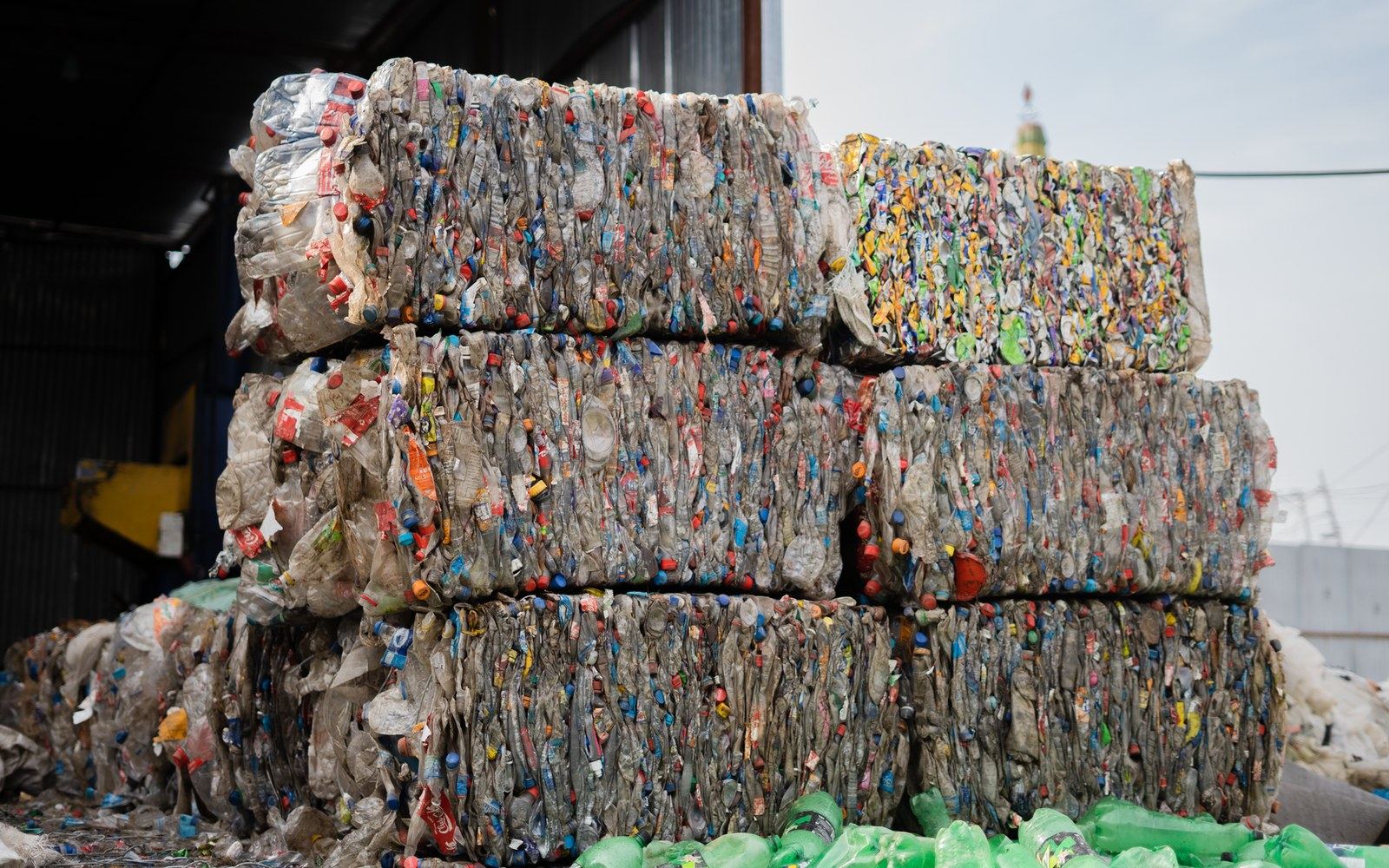
Baled at the end of sorting. Bale grade, not garment quality, sets the price.
Photo: Gaurav Ranjitkar / Pexels