After September 2026 'Eco' Will Need a Number Behind It
Directive (EU) 2024/825 closes the gap between the word 'sustainable' and the evidence behind it — for every garment sold in the EU market.

Directive (EU) 2024/825 bans unqualified environmental claims from 27 September 2026.
Photo: RDNE Stock project / PexelsWhat the Directive Prohibits
From 27 September 2026, a clothing company selling into the European Union will no longer be permitted to describe a product as 'sustainable', 'eco-friendly', 'green', 'conscious' or any equivalent vague environmental term unless the claim is substantiated by recognised scientific evidence and independently verified. The rule comes from Directive (EU) 2024/825, the Empowering Consumers for the Green Transition directive, which amends the 2005 Unfair Commercial Practices Directive and the 2011 Consumer Rights Directive. The European Parliament adopted the final text in February 2024; member states have until March 2026 to transpose it into national law, leaving six months before the substantiation requirement bites.
The directive's scope is broad. It applies to any trader making a commercial communication — a label, a webpage, a campaign image, a swing tag — directed at consumers in the EU. Geographic incorporation does not matter: a brand headquartered in New York, Hong Kong or London faces the same obligations as one in Brussels if its goods reach European consumers. Clothing is not singled out by name, but it is among the sectors the European Commission's own impact assessment identified as carrying the highest density of unsubstantiated green claims, alongside cosmetics and household cleaning products.
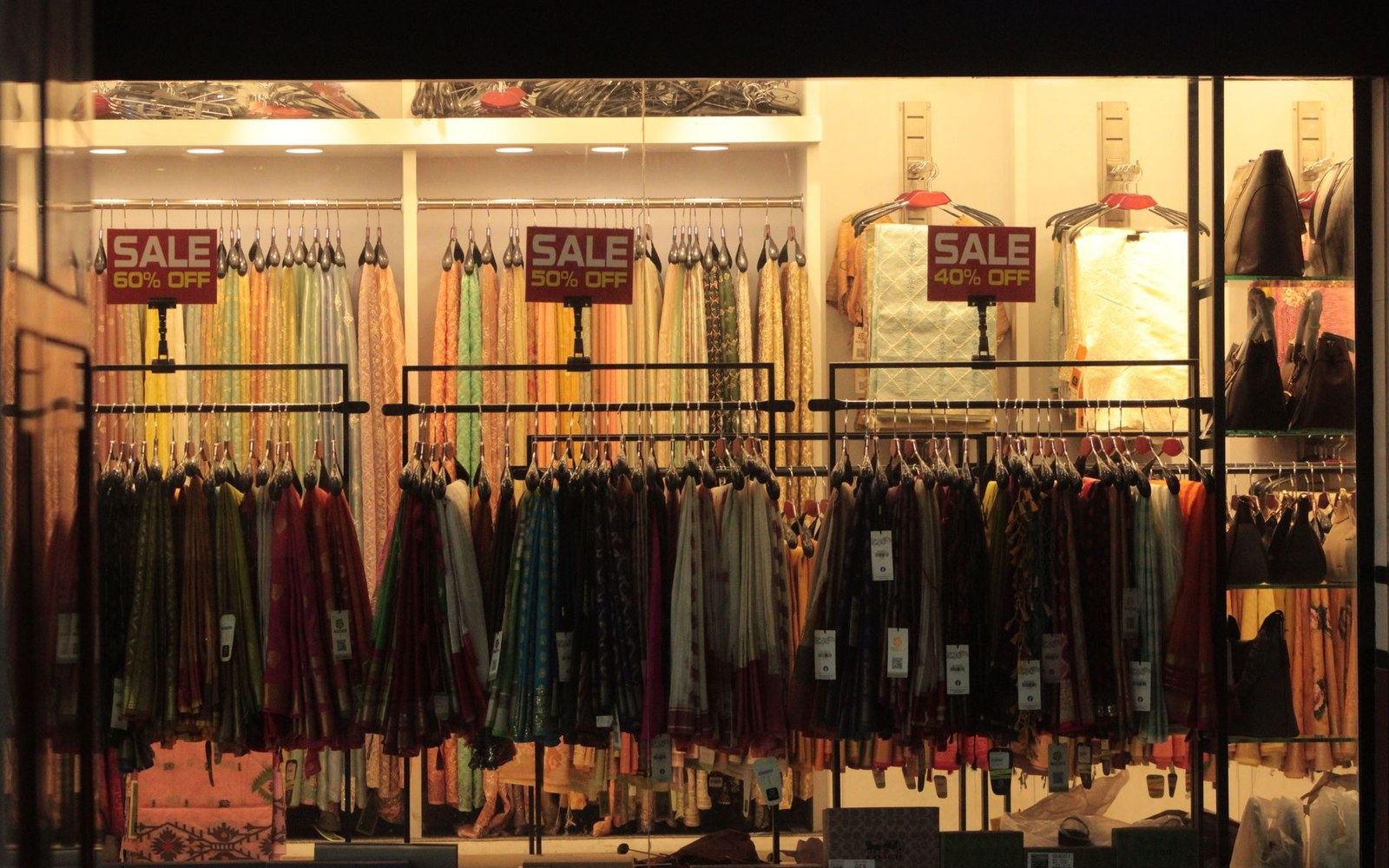
The advertising ban reaches promotion, not the shelf.
Photo: Jahra Tasfia Reza / PexelsSubstantiation, under the directive, means grounding a claim in a recognised, publicly available methodology that accounts for a product's full life cycle. A garment labelled 'eco' because it uses organic cotton but is produced under energy-intensive conditions at high volume does not, on a life-cycle basis, meet that standard. Aggregate or company-level sustainability claims applied to individual products — 'part of our sustainability programme', for instance — are explicitly captured as potentially misleading if they suggest environmental virtue the specific item cannot demonstrate.
What Auditors and Regulators Have Already Found
The directive codifies at EU level what national consumer-protection authorities have been finding for several years. A 2021 audit by the European Commission itself examined green claims across multiple sectors and found that more than half could not be verified, with 40 per cent entirely unsubstantiated. Clothing featured prominently in that sample. Separately, the UK's Competition and Markets Authority, applying its own Green Claims Code, extracted undertakings from ASOS, Boohoo and George at Asda in 2023 over product collections named with words like 'Responsible' or 'Eco' that lacked the material or production evidence to support the designation.
Key dates
- February 2024European Parliament adopts Directive (EU) 2024/825
- March 2026deadline for EU member states to transpose the directive into national law
- 27 September 2026substantiation requirement enters force; generic unverified green claims become unlawful
Those UK findings have no binding effect on the EU, and the CMA's mechanism — undertakings rather than fines — is softer than what the directive enables. Member states implementing Directive (EU) 2024/825 will be required to impose penalties that are "effective, proportionate and dissuasive", with the maximum fine set at no less than 4 per cent of annual turnover in the member state where the infringement occurred. That figure gives the rule teeth that the CMA's voluntary commitment model does not.
What Substantiation Will Require
The practical meaning of substantiation is still being worked out. The directive does not mandate a single approved methodology; instead, it requires that whichever method a company uses is widely recognised and capable of independent verification. The European Commission's Product Environmental Footprint (PEF) methodology, developed over more than a decade, is the most likely reference framework for clothing — it covers sixteen environmental impact categories, including climate change, water scarcity and resource use. Using PEF or an equivalent method means commissioning life-cycle assessment data, not writing a policy statement.
For companies that have built collection names and campaign language around words like 'conscious' or 'responsible', the directive represents a structural change in marketing practice, not a labelling tweak. Generic umbrella terms will have to retire or be replaced by specific, measurable claims — a stated percentage of recycled content, a verified reduction in water use against a named baseline — each of which can itself be scrutinised. The digital product passport framework advancing separately under Regulation (EU) 2024/1781 is designed to carry exactly this kind of machine-readable verification data, and the two instruments are, in effect, building toward the same outcome: a market in which the word 'eco' on a garment points to a number, not a mood.
The penalty mechanism
- Fines — must be "effective, proportionate and dissuasive" under national implementation
- Ceiling reference — at least 4 per cent of annual turnover in the infringing member state
- Contrast — UK CMA mechanism relies on undertakings (binding commitments), not fines
What counts as a banned claim
- 'Sustainable' — prohibited without life-cycle substantiation
- 'Eco-friendly' — prohibited without life-cycle substantiation
- 'Green' — prohibited without life-cycle substantiation
- 'Conscious' — prohibited without life-cycle substantiation
- Company-level sustainability programme claims applied to individual products — explicitly captured as potentially misleading
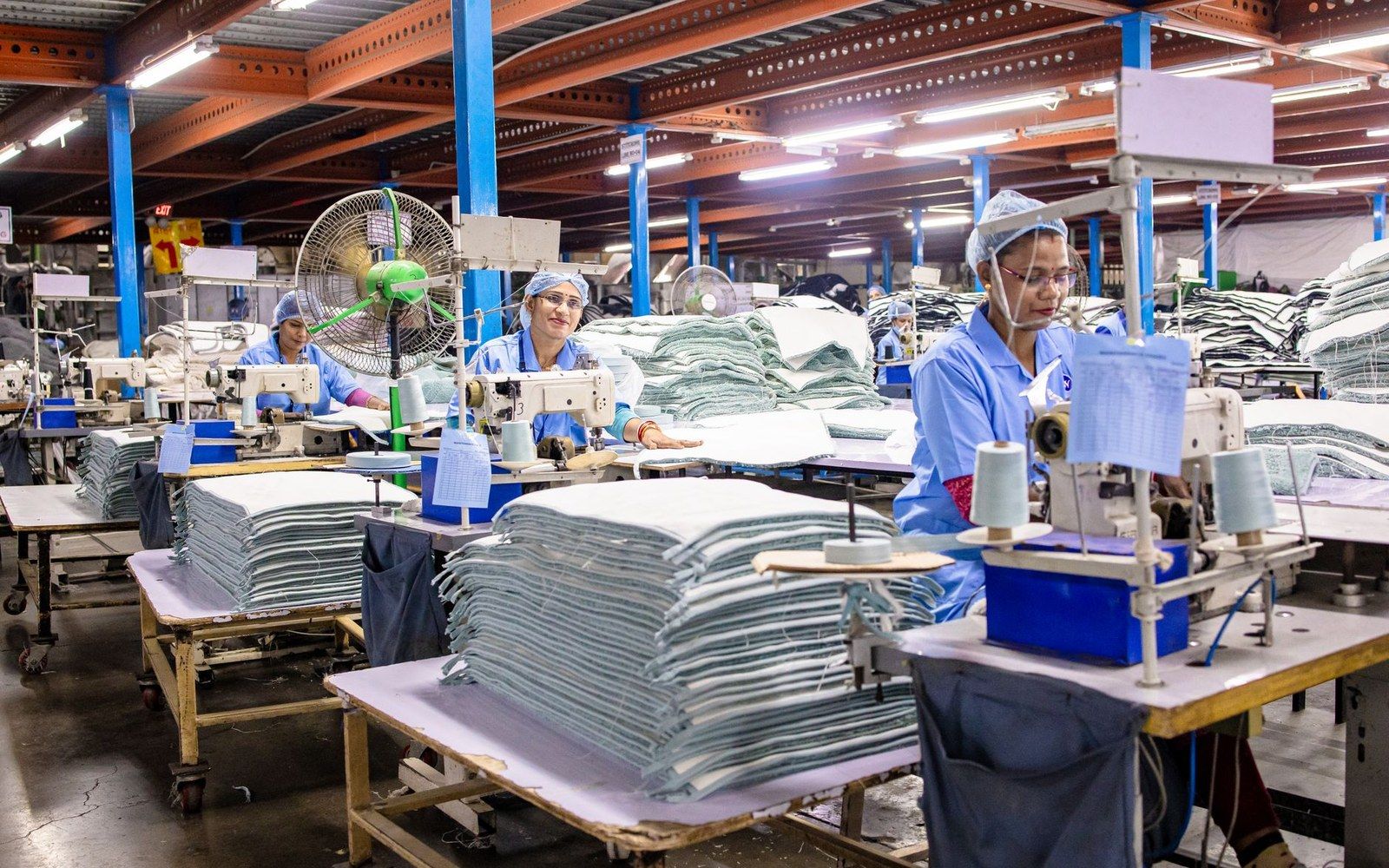
Assembly stitching at a garment unit. The frequency thresholds in the French text are written against the release cadence a floor like this can sustain.
Photo: EqualStock IN / Pexels