Undertakings, Not Fines
The UK's competition regulator closed its fashion green-claims investigation with binding commitments, not penalties. What that means in practice — and how it compares with Brussels.
The Competition and Markets Authority opened its fashion investigation in July 2022 and took undertakings in March 2024.
Photo: Andrzej Gdula / PexelsWhat the Code Requires
The Competition and Markets Authority launched its review of fashion sector environmental claims in July 2022, applying a framework it had published the previous year. The CMA's Green Claims Code sets six baseline requirements: claims must be truthful and accurate, must be clear and unambiguous, must not omit material information, must compare products fairly, must consider the full product lifecycle, and must be substantiated. None of those standards is new to consumer-protection law, but the Code gathered them into a single operational document directed at marketing teams.
The regulator had signalled as early as 2021 that green marketing in fashion was a priority. Its concern was not fringe actors but mainstream retail language — terms such as "responsible", "sustainable" and "eco-friendly" attached to clothing lines without the evidence to support them. The three companies it named when it announced a formal investigation in January 2023 — ASOS, Boohoo and Asda — each ran dedicated sustainable-range labelling schemes: ASOS Responsible Edit, Boohoo's "Ready for the Future" range, and Asda's George at Asda "George for Good" label.
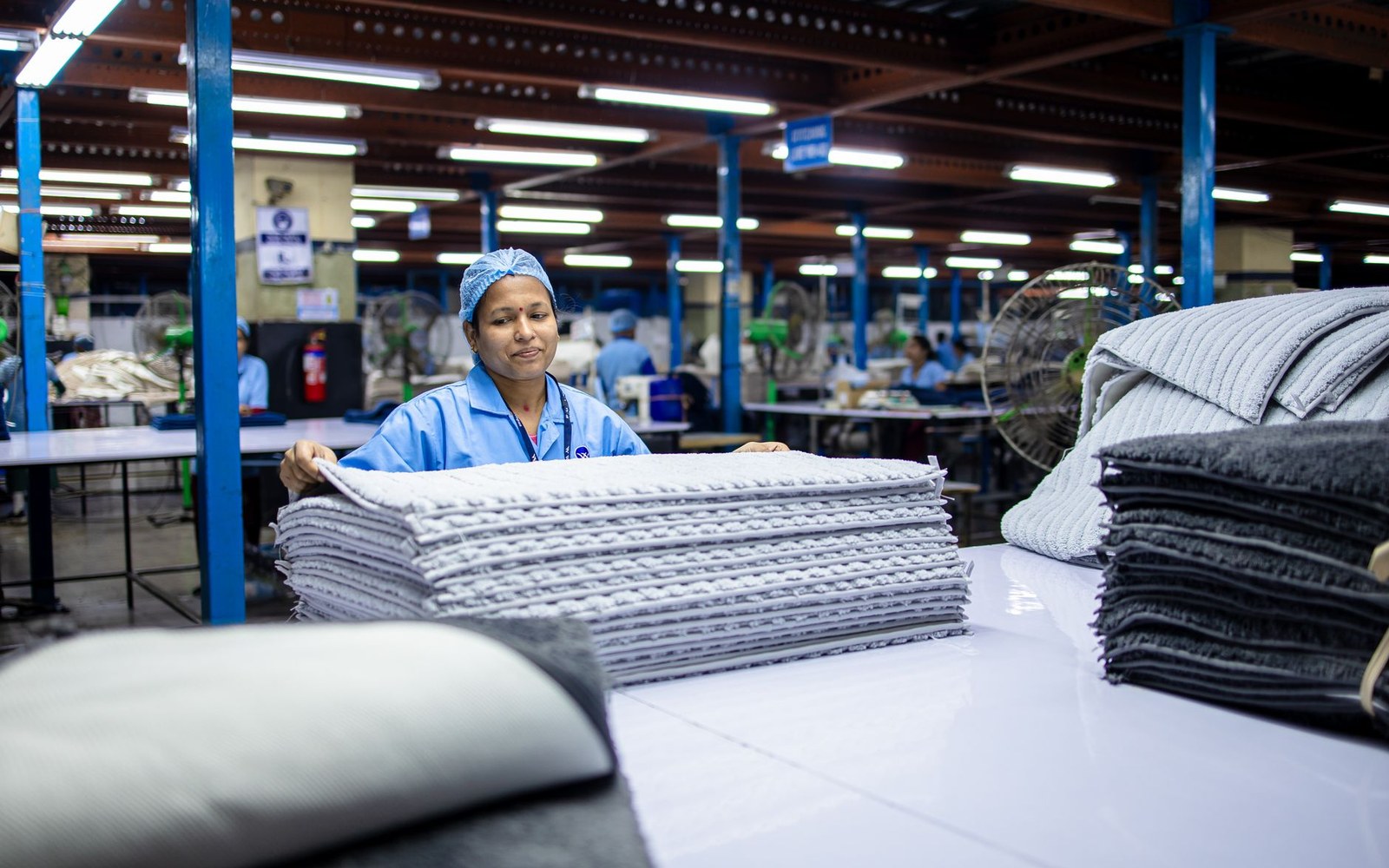
Grading is manual: reuse, recycling, refuse. Separate collection produces the stream; the sorting decides what it is worth.
Photo: EqualStock IN / PexelsWhat Each Undertaking Required
In March 2024 all three retailers gave undertakings — legally binding commitments accepted by the CMA in lieu of formal enforcement action. An undertaking of this kind is not a fine; it carries no financial penalty for the conduct already found. Its force lies in what happens next: breach of an accepted undertaking is contempt of court.
The substantive commitments ran along similar lines across the three companies. Each agreed to stop using vague environmental terms unless they could be substantiated with clear, accessible evidence. Each agreed that percentage figures describing the recycled or organic content of products — a common device in sustainable-range labelling — must refer to the specific garment, not to a brand-wide or supply-chain average. Each agreed to make the criteria for inclusion in a dedicated sustainable range explicit to shoppers, so that the range itself did not become an implied blanket endorsement.
The three undertakings at a glance
- ASOS — must substantiate claims in the Responsible Edit on a garment-by-garment basis; no range-level averaging
- Boohoo — must fix filter labelling so sustainability filters return only compliant products; no unsupported "planet" claims
- Asda (George for Good) — must disclose actual recycled-content proportions per garment; cannot imply whole-garment benefit from partial content
Boohoo's undertaking also addressed the "filter" problem: its website had allowed shoppers to filter by sustainability attributes in ways that returned results not meeting the standards implied by the filter label. ASOS committed to review how its Responsible Edit applied standards consistently across all listed products. Asda agreed to remove claims that implied environmental benefit from recycled materials without disclosing what proportion of the garment those materials actually comprised.
The CMA published the full undertakings alongside a statement confirming that no further action would be taken provided compliance was maintained.
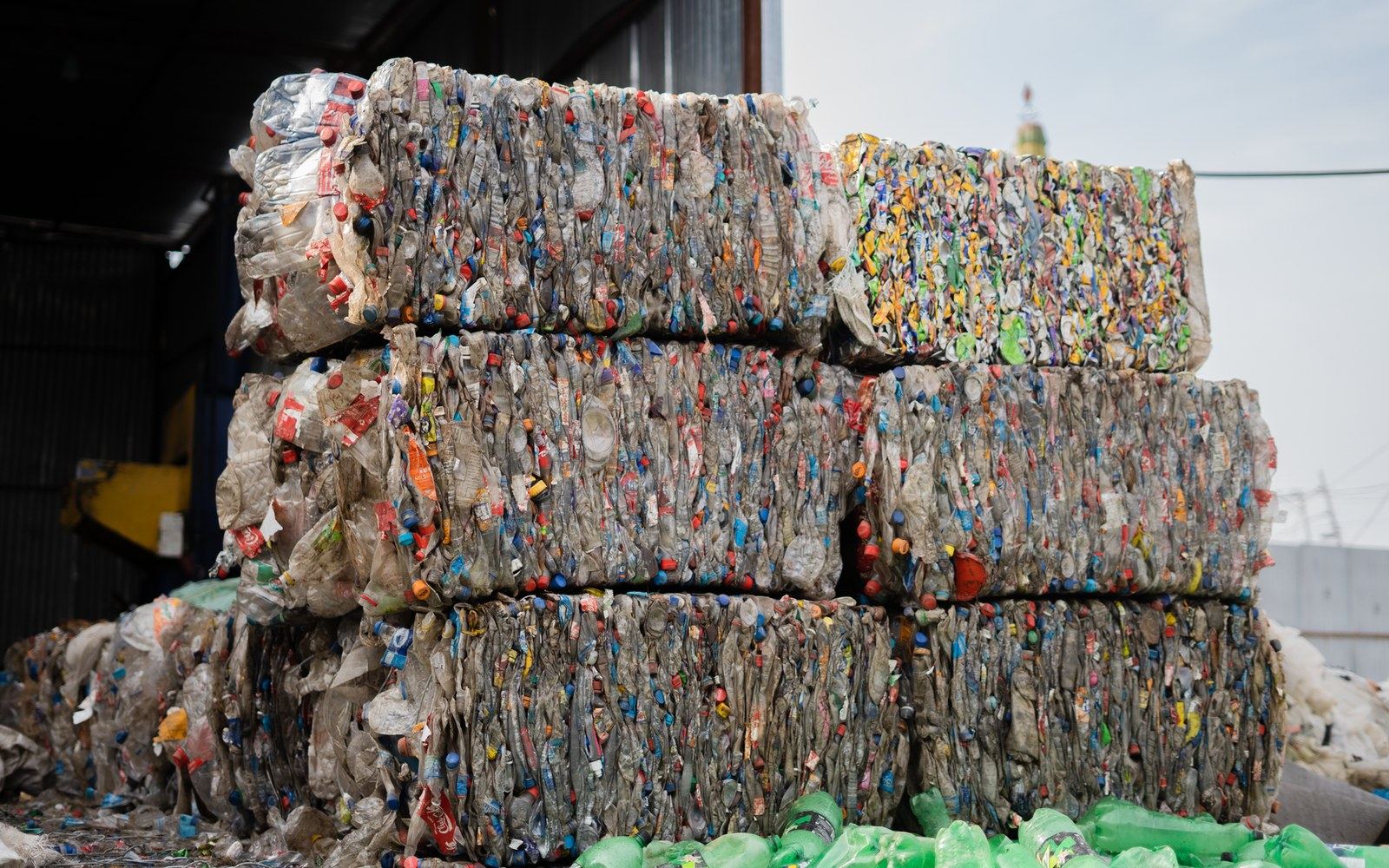
Baled at the end of sorting. Bale grade, not garment quality, sets the price.
Photo: Gaurav Ranjitkar / PexelsThe EU Comparison
The contrast with European enforcement is structural. The EU's approach to green-claims regulation works through Directives that bind member states to legislate, and through national consumer-protection authorities that carry fining powers. Directive (EU) 2024/825, which entered force in March 2024, explicitly bans generic environmental claims — words such as "sustainable" or "eco-friendly" without quantified substantiation — and requires member states to impose penalties including fines of at least four per cent of annual turnover for violations.
The UK, post-Brexit, long had no equivalent graduated financial penalty regime for green-claims breaches in consumer markets. The CMA's primary lever in competition and consumer-protection matters is the undertaking model, and the Digital Markets, Competition and Consumers Act 2024 gave the CMA new direct enforcement powers for consumer law — including the ability to fine companies up to ten per cent of global turnover — but that regime applies to consumer protection breaches the CMA investigates in future, not to the 2022–2024 fashion inquiry, which concluded before the Act came into force.
That timing matters. ASOS, Boohoo and Asda gave commitments about future conduct. They paid nothing for past conduct. Whether the undertaking model changes industry behaviour as durably as a financial penalty would is an open question that will be answered, eventually, by how the labelling looks in 2026.
Enforcement vocabulary
- undertaking — a legally binding commitment given to the CMA; breach is contempt of court, not merely a regulatory infraction
- Green Claims Code — the CMA's six-point standard for environmental marketing, published 2021, applying existing consumer law to green claims
- Directive (EU) 2024/825 — the EU instrument banning generic green claims; mandates member-state penalties of at least 4% of annual turnover

Roll stock bought against a forecast. On-demand production inverts the order — the cloth is committed after the style sells.
Photo: wal 172619 / Pexels