Shein's Model, and the IPO It Has Not Completed
The on-demand production method that built a catalogue of millions of SKUs — and why two stock exchanges have yet to clear it

Small test runs scaled against live sales data — the model that produces the release cadence the French thresholds were drawn around.
Photo: Mehmet Turgut Kirkgoz / PexelsHow the Model Works
Shein does not design clothes and then make them. It tests them. The company uploads thousands of styles — typically in runs of one to two hundred units — and measures click-through rates, add-to-cart data and actual purchases within a window of days. Styles that convert get restocked and scaled; those that do not are quietly dropped. This is micro-batch production operating at a speed and granularity that conventional wholesale schedules cannot replicate.
The production infrastructure is concentrated in Guangzhou, where Shein has built a dense supplier network inside a single geographic cluster, allowing it to turn a design file into a shipped garment in as few as three to seven days. Because the initial run is small, there is almost no unsold stock to write down — the financial waste that haunts traditional fast-fashion models is largely eliminated. What replaces it is velocity: published estimates of Shein's daily new-style count range across thousands of SKUs per day, depending on the methodology, making direct comparison with Zara or ASOS a categorical mismatch rather than a difference of degree.

Roll stock bought against a forecast. On-demand production inverts the order — the cloth is committed after the style sells.
Photo: wal 172619 / PexelsThat volume is precisely what drew Shein inside the scope of France's fast-fashion legislation, passed by the French National Assembly on 14 March 2024. The law introduced an eco-score levy — a per-item environmental surcharge — and advertising restrictions applying to platforms offering more than a defined threshold of annual new styles. Shein was named explicitly in the parliamentary record. The levy, if and when the law passes through the French Senate, is set to reach €10 per item by 2030.
The IPO Sequence
Shein filed confidentially with the US Securities and Exchange Commission for a New York listing in late 2023. The filing set off a sequence of difficulties that has not resolved. Congressional scrutiny focused on two interrelated concerns: the company's use of the de minimis exemption — which historically allowed parcels valued below $800 to enter the United States without duty or formal customs inspection — and forced-labour risk in its supply chain, particularly in relation to Xinjiang cotton. A bipartisan letter from members of the House Select Committee on the Chinese Communist Party demanded supply-chain disclosure that Shein had not made public. The New York listing stalled.
Key dates in the IPO sequence
- Late 2023Shein files confidentially with the SEC for a proposed New York listing
- March 2024French National Assembly passes fast-fashion levy legislation, naming Shein in parliamentary record
- Early–mid 2024Shein enters FCA/LSE discussions for a London primary listing
- Mid-2025Neither New York nor London listing completed; company remains private
The company then pivoted to London. By early 2024 it was in discussions with the Financial Conduct Authority and the London Stock Exchange about a primary listing in the United Kingdom. The London bid appeared to progress further than New York — advisers were appointed, a valuation in the region of $50 billion was reported in financial press coverage, down from an earlier private funding round that had implied $66 billion — but it too encountered resistance. Parliamentary questions in Westminster raised the same labour-sourcing concerns, and UK legislators pressed the government on whether listing rules gave sufficient grounds to demand supply-chain transparency as a condition of admission.
As of mid-2025, neither listing has completed. Shein remains a private company incorporated in Singapore, having relocated its legal headquarters from China in 2021 — a move widely read as preparation for Western capital markets. Its major shareholders include the private equity firm General Atlantic.

The show calendar and the drop calendar now run at different speeds.
Photo: Matheus Bertelli / PexelsWhat the Delay Reveals
The IPO sequence is not only a corporate finance story. It has exposed a structural vulnerability in Shein's model: the same opacity that makes micro-batch production operationally efficient — short-cycle supplier relationships, no public bill of materials, no disclosed chain of custody for raw fibre — becomes a liability the moment a stock exchange or parliamentary committee asks for evidence. Institutional investors considering a public offering require due-diligence materials that Shein, by its own production logic, has limited incentive to generate or share.
The EU's digital product passport regulation, in force from July 2024 under Regulation (EU) 2024/1781, will eventually require a machine-readable record of materials and supply chain to be attached to garments sold in the European market. For a company releasing thousands of distinct styles per day from a network of hundreds of small workshops, building that infrastructure is a different order of task than it is for a brand with a stable seasonal catalogue. The model that made Shein dominant is precisely the model that makes compliance hardest to demonstrate — and, so far, listing hardest to achieve.
The production numbers in context
- Initial test run size: typically 100–200 units per style
- Turnaround from design file to shipped garment: reported at 3–7 days
- Daily new-style uploads: estimated in the thousands of SKUs (methodology-dependent)
- French eco-score levy ceiling: €10 per item, targeted for 2030
- Shein's implied valuation at London discussions: reported around $50 billion (down from $66 billion at prior private funding round)
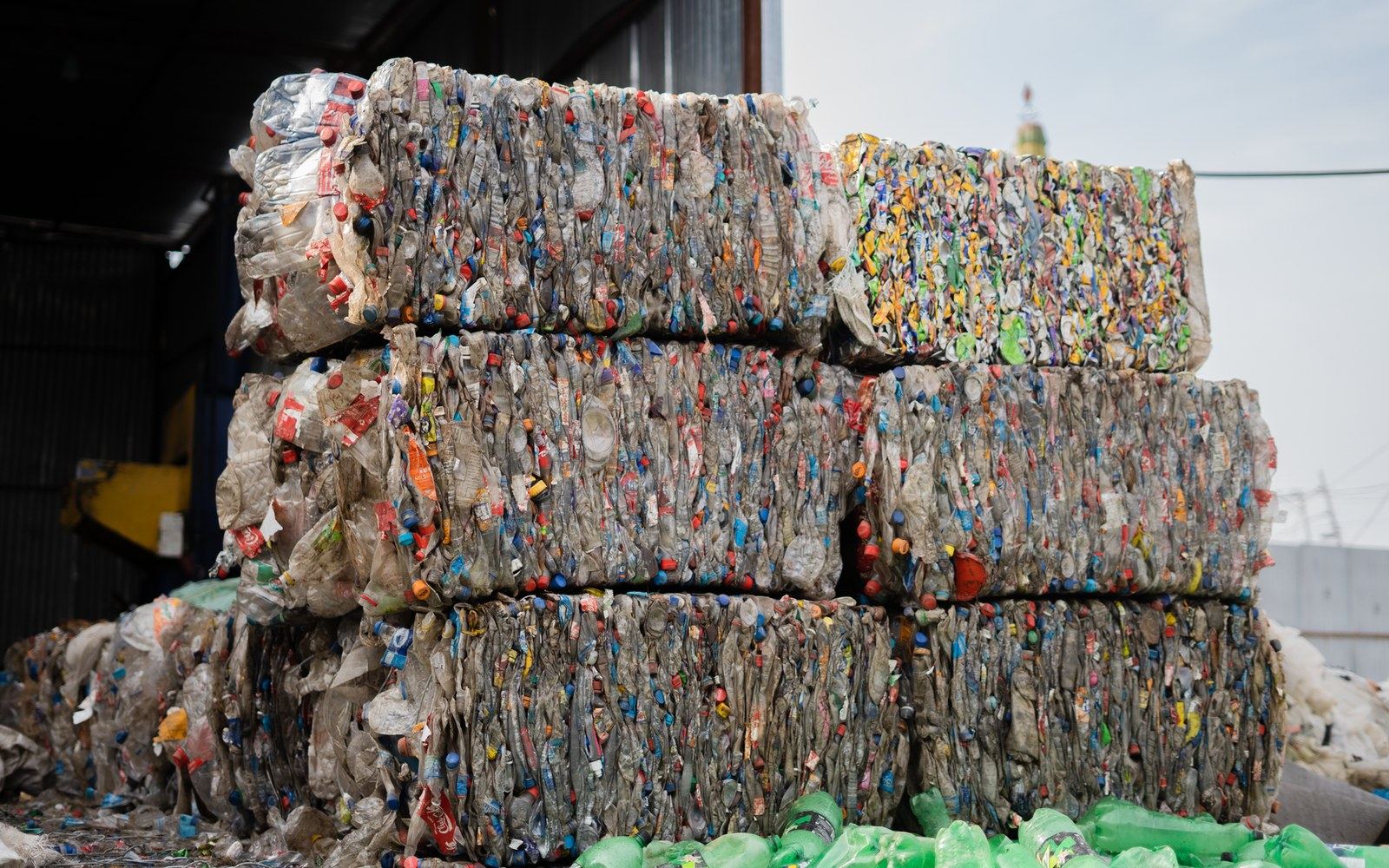
Baled at the end of sorting. Bale grade, not garment quality, sets the price.
Photo: Gaurav Ranjitkar / Pexels