What Textile Exchange Counts and How
The Materials Market Report is the most-cited source for global fibre production data — understanding what it measures is as important as knowing what it finds.

The report the European Commission cites in its own regulatory impact assessments.
Photo: The recycle bag at the Kabilin Center 2 · Wikimedia CommonsScope, method and gaps
Textile Exchange is a US-based non-profit whose annual Materials Market Report provides the figures most widely reproduced in regulatory documents and industry sustainability strategies. The European Commission has drawn on its data in impact assessments supporting the Ecodesign Regulation; the report's headline finding — that polyester accounted for roughly 54 per cent of global fibre production in 2022 — has become a standard citation across policy circles.
The report's scope is global fibre production by volume, measured in metric tonnes. It covers synthetic fibres, cotton, wool, man-made cellulosics (including viscose and lyocell), and a growing set of preferred-material categories. For conventional volumes, Textile Exchange draws on third-party trade data, principally from the International Textile Manufacturers Federation and comparable national industry bodies, rather than conducting primary production surveys itself.
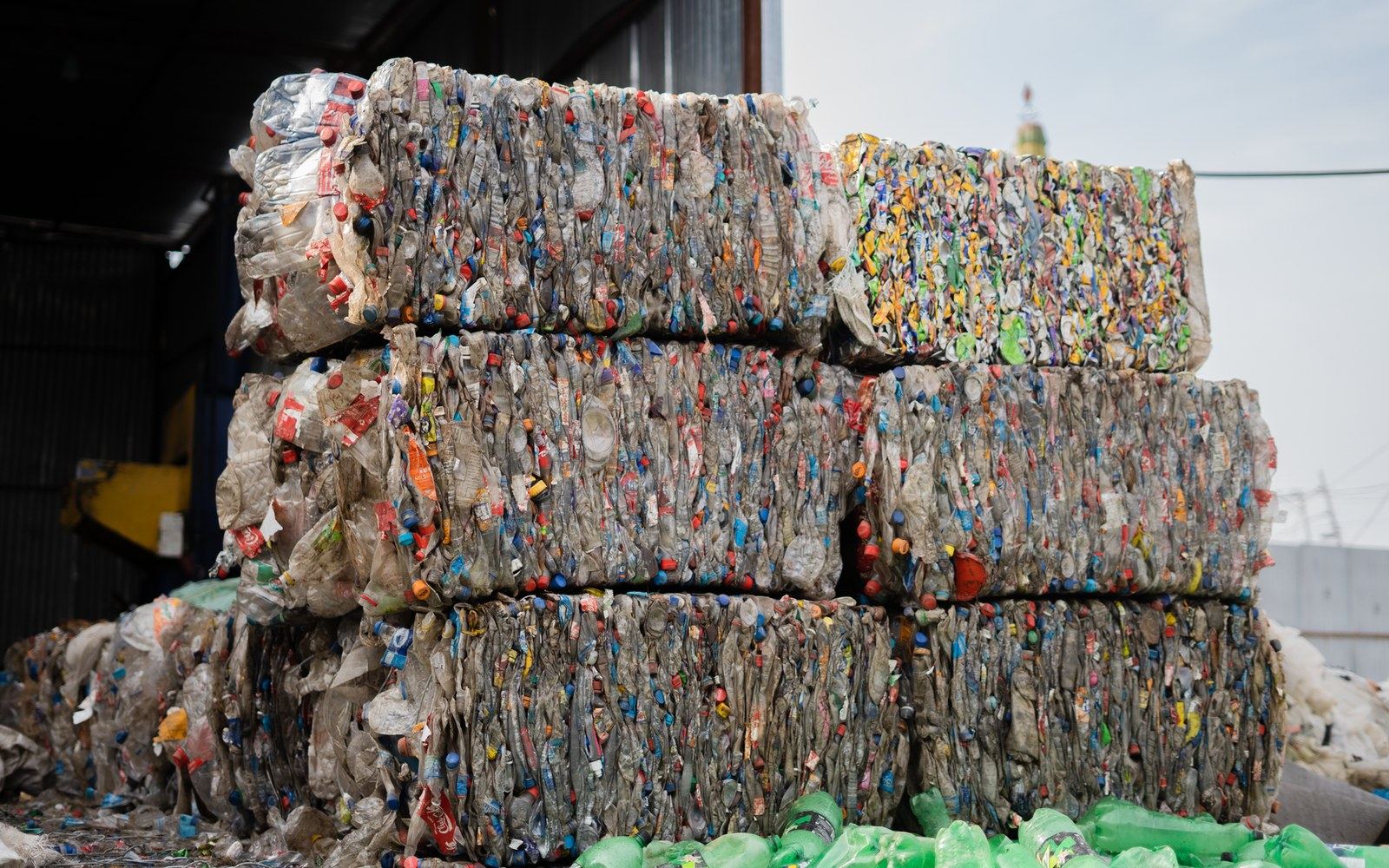
Baled at the end of sorting. Bale grade, not garment quality, sets the price.
Photo: Gaurav Ranjitkar / PexelsCertified-material figures work differently. For preferred cotton, recycled polyester, organic wool and similar categories, Textile Exchange aggregates data from its own certification programmes — including the Recycled Claim Standard, the Global Recycled Standard and the Organic Content Standard — as well as from partner schemes such as Better Cotton. These figures represent certified volumes placed on the market, not independently audited end-product content, and they reflect a chain-of-custody model rather than traceability to specific garments. The distinction matters: a tonne of Better Cotton certified fibre is tracked through purchase of a credit, not through physical segregation to a finished item.
Several material categories remain outside the report's regular tracking. Bio-based synthetics, most alternative leathers, and novel fibres derived from agricultural waste appear inconsistently or not at all; Textile Exchange flags this as a data-availability problem rather than a methodological choice. The report also does not capture fibre end-of-life flows — post-consumer recycled content is measured at the input stage, not traced back to collected garments.
Readers using the report as a regulatory source should note its publication cadence: data typically lags the reference year by twelve to eighteen months, meaning the most recent edition reflects market conditions from the prior year.
What the report covers — and what it doesn't
- Global fibre production figures — drawn from ITMF and national industry body trade data, not primary surveys
- Certified preferred materials — aggregated from Textile Exchange's own standards (RCS, GRS, OCS) plus partner schemes including Better Cotton
- Chain-of-custody model — certified volume tracked by credit purchase, not physical segregation to finished garment
- Missing categories — bio-based synthetics, alternative leathers, agricultural-waste fibres tracked inconsistently or not at all
- End-of-life gap — post-consumer recycled content measured at input, not traced from collected garments
- Data lag — published figures typically trail the reference year by 12–18 months

The show calendar and the drop calendar now run at different speeds.
Photo: Matheus Bertelli / Pexels