Four Indexes, Four Definitions of Transparent
The Fashion Transparency Index, the Corporate Human Rights Benchmark, the Know The Chain Benchmark and the Dow Jones Sustainability Index all claim to measure how open clothing companies are. They measure different things — and for the same company, the scores rarely agree.

Four indexes, four definitions of transparent — and four different rankings for the same companies.
Photo: RDNE Stock project / PexelsWhat Each Tool Is Actually Asking
Fashion Revolution's Fashion Transparency Index, published annually since 2016, scores brands on how much they disclose about their policies, supply-chain mapping, supplier lists and social and environmental outcomes. The methodology is document-based: researchers examine what companies publish, not what audits find on the ground. A brand that publishes a detailed supplier list with factory names and addresses scores higher than one whose operations are cleaner but less documented. The 2023 edition scored 250 brands across 258 indicators, with the highest-scoring brands — typically large European groups — still falling well below 80 percent. LVMH and Kering subsidiaries appear in the index, but luxury conglomerates as holding companies tend to score lower than their best-performing individual labels.
The Corporate Human Rights Benchmark, produced by a coalition of institutional investors and civil-society organisations, takes a narrower human-rights focus. Its apparel and footwear methodology scores companies on six themes: commitment and governance, embedding respect, identifying and assessing risks, ceasing and remediating impacts, engagement with affected stakeholders, and transparency. Crucially, it weights practice over publication: a company must show evidence of action, not only a published policy. This is where rankings begin to diverge from Fashion Revolution's list. A brand that publishes extensive sustainability reports but cannot demonstrate a functioning grievance mechanism open to supply-chain workers may score well on the Transparency Index and poorly on the Benchmark.
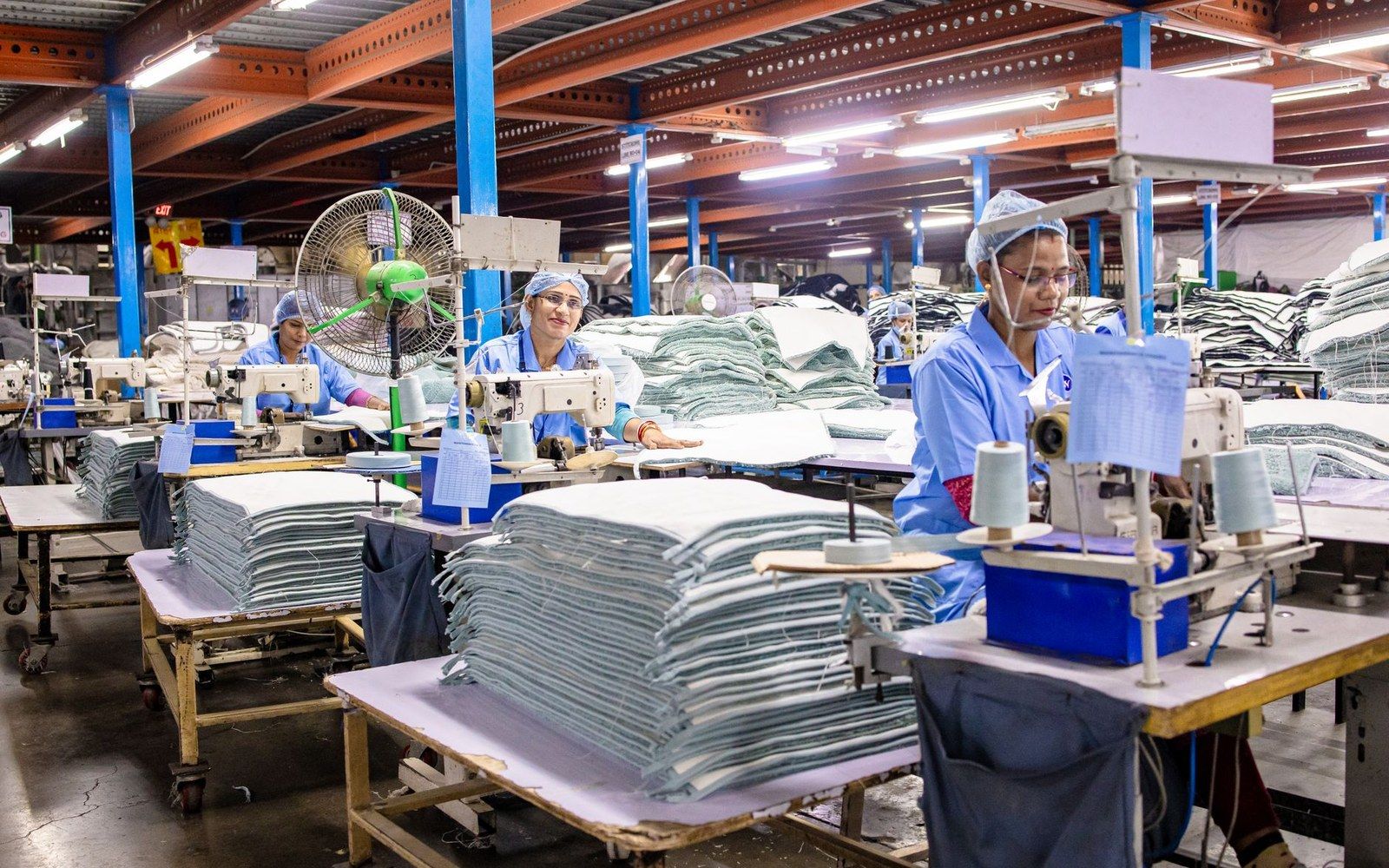
Assembly stitching at a garment unit. The frequency thresholds in the French text are written against the release cadence a floor like this can sustain.
Photo: EqualStock IN / PexelsKnow The Chain, a benchmark run by Business and Human Rights Resource Centre, concentrates specifically on forced labour. Its apparel and footwear benchmark covers seven themes drawn from the UN Guiding Principles on Business and Human Rights, with particular attention to recruitment fees paid by migrant workers — a structural cause of debt bondage — and purchasing practices that create wage pressure downstream. Know The Chain's 2023 apparel benchmark covered 65 companies and found the average score was 29 out of 100. Inditex scored above the sector average; several large wholesale and sportswear brands scored in the single digits. Bangladesh supply-chain concentration is a recurring factor: companies sourcing heavily there face additional scrutiny on worker representation and remedy.
The Dow Jones Sustainability Index, operated by S&P Global in partnership with RobecoSAM, works differently again. Clothing companies are assessed within S&P Global's Corporate Sustainability Assessment, which covers environmental, social and governance dimensions but weights them by sector materiality. For textile and apparel companies, environmental criteria — water use in dyeing and finishing, chemical management, carbon reporting — carry substantial weight alongside labour practices. Inclusion in the DJSI is a binary outcome rather than a ranked score, and it is self-reported: companies complete a detailed questionnaire and submit supporting documentation. The process creates a selection bias toward large, adequately resourced companies with dedicated sustainability teams.
How the four indexes compare
- Fashion Transparency Index — measures disclosure volume; document-based; 250+ brands scored annually; rewards publication over practice
- Corporate Human Rights Benchmark — measures human-rights due diligence practice; investor-backed; requires evidence of action, not only policy
- Know The Chain Benchmark — measures forced-labour risk specifically; 65 apparel companies; average score 29/100 in 2023; scrutinises recruitment fees and purchasing practices
- Dow Jones Sustainability Index — ESG materiality framework; binary inclusion/exclusion; self-reported questionnaire; weights environmental criteria heavily for textile sector
Where the Rankings Come Apart
Mapping the same fifteen companies across all four instruments produces visible contradictions. A luxury house with meticulous carbon accounting may score in the top quartile of the DJSI assessment while scoring modestly on Know The Chain because it provides limited evidence of policies on recruitment fees or purchasing-practice reform. A fast-fashion operator that publishes an extensive supplier list and first-tier factory data may rank relatively well on Fashion Revolution's index while receiving a poor Corporate Human Rights Benchmark score because its grievance-mechanism documentation is thin.
The divergences are not errors. They reflect genuine differences in what each instrument was built to measure: disclosure volume, human-rights due diligence, forced-labour risk or ESG materiality. A company cannot game all four simultaneously with a single strategy, which is precisely what makes comparing them useful. None of the four ranks brands on actual working conditions as directly observed — all depend on documentation, disclosure or self-reporting at some stage. That structural limitation is what proposals for mandatory human-rights due diligence legislation, advancing in Brussels and already enacted in France and Germany, are designed to address.
Key divergence to illustrate
- A company may rank highly on Fashion Revolution (publishes supplier list) while scoring poorly on Know The Chain (no evidence of anti-recruitment-fee policy)
- A company may meet DJSI inclusion criteria on carbon accounting while failing Corporate Human Rights Benchmark on worker grievance mechanisms
- All four rely on documentation or self-reporting at some stage — none measures conditions as directly observed
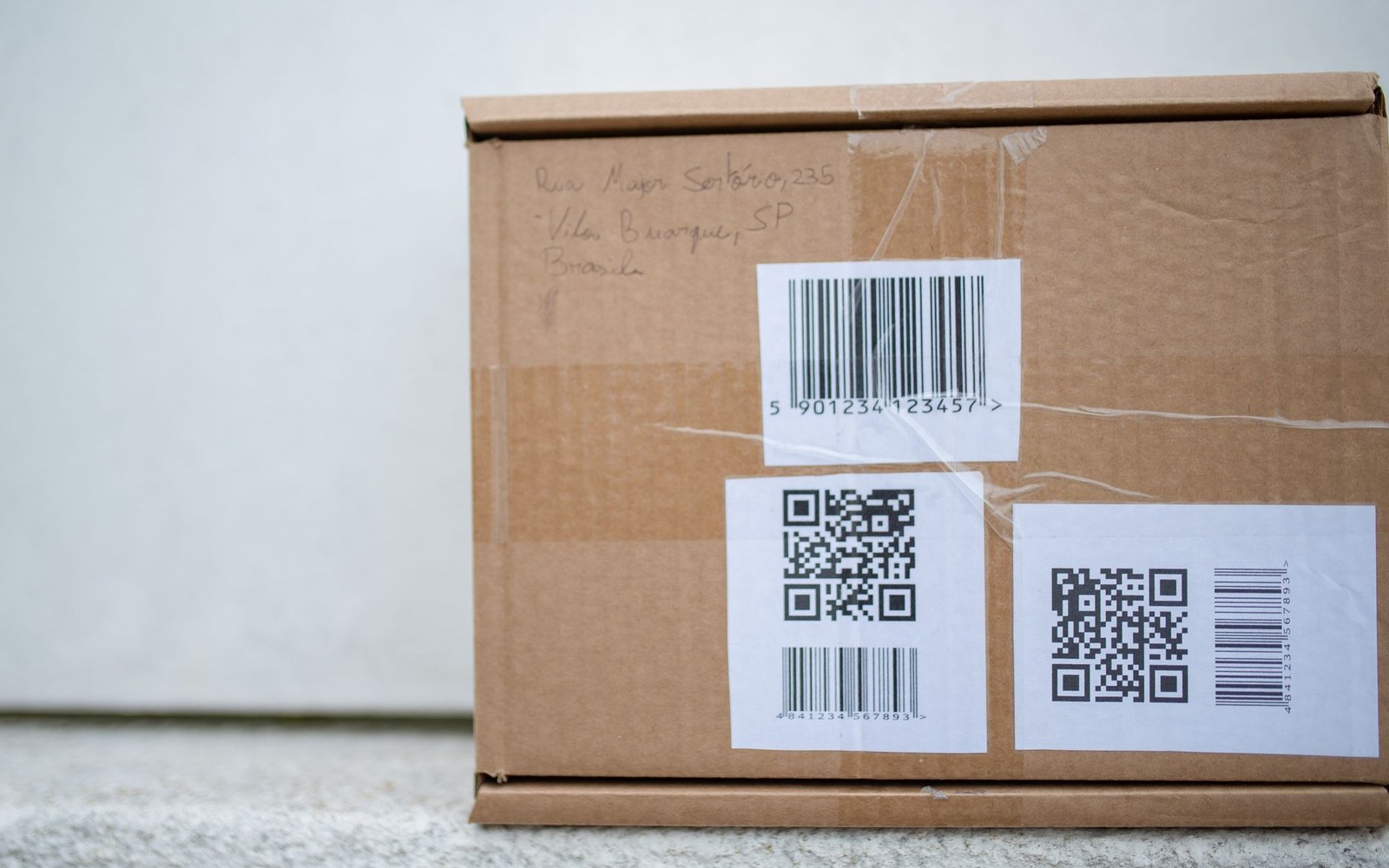
Barcode and QR stickers on an inbound parcel. The digital product passport has to carry more than this, and fit on the garment’s own label.
Photo: Kampus Production / Pexels