The Higg Score Came Off the Label
A Norwegian regulator's finding in 2022 forced the Sustainable Apparel Coalition to pull consumer-facing Higg Index claims from the market — exposing how lifecycle assessments can mislead even when the underlying data is real.
The Norwegian Consumer Authority’s finding of June 2022 took the score off the label.
Photo: Ann H / PexelsWhat the Norwegian Consumer Authority Found
In June 2022 the Norwegian Consumer Authority ruled that H&M's use of the Higg Materials Sustainability Index on consumer-facing marketing constituted misleading advertising under Norwegian marketing law. The regulator's core finding was precise: the MSI scores that H&M displayed compared the environmental footprint of individual materials without adequately communicating the limitations of that comparison to ordinary shoppers. Crucially, the scores assessed only a subset of environmental impacts — notably excluding water consumption at the use phase and, in some configurations, land use — while presenting the results in a way that implied comprehensive environmental superiority. A shopper reading that a polyester jacket carried a lower Higg MSI score than a cotton equivalent had no practical way to know what the number did and did not measure.
The Sustainable Apparel Coalition, the industry body that administers the Higg Index suite, responded within weeks by suspending consumer-facing application of the MSI. That suspension covered not just H&M but the whole program: brands that had been licensed to show Higg-based environmental claims in stores or on product pages were instructed to remove them while the Coalition reviewed its methodology and communication approach. Higg-based claims had appeared in the marketing of multiple large European retailers.
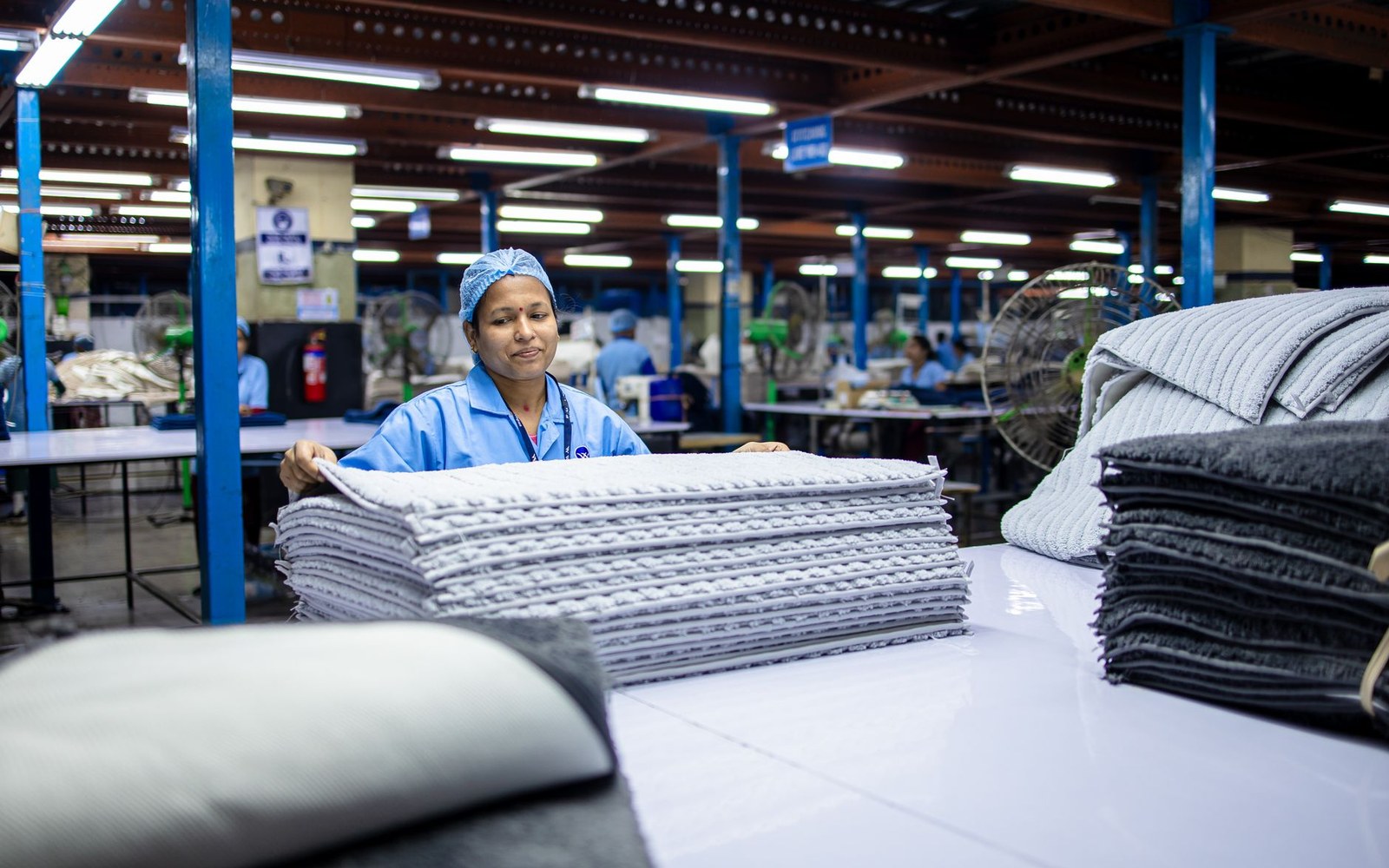
Grading is manual: reuse, recycling, refuse. Separate collection produces the stream; the sorting decides what it is worth.
Photo: EqualStock IN / PexelsWhat the Index Was, and What It Was Not
The Higg MSI is a lifecycle assessment tool — specifically a cradle-to-gate assessment, meaning it measures impacts from raw material extraction through to the point of manufacture but excludes what happens when the garment is worn, washed and eventually discarded. That scope is a recognised and defensible methodological choice within LCA practice; the problem the Norwegian Consumer Authority identified was not the existence of that boundary but the failure to communicate it.
Lifecycle assessment methodology is inherently selective. Every LCA defines a functional unit, a system boundary and a set of impact categories, and reasonable practitioners disagree about which categories matter most for textiles. ISO 14040 and 14044, the international standards governing LCA, require that scope limitations be disclosed — but those disclosure requirements are written for technical practitioners, not for a hang-tag or a product page.
Chronology
- June 2022Norwegian Consumer Authority rules H&M's Higg MSI consumer claims misleading under Norwegian marketing law
- June 2022Sustainable Apparel Coalition suspends consumer-facing Higg Index MSI program across all licensed brands
- Late 2022Coalition opens external review and stakeholder consultation on revised consumer communication protocols
- 2024EU Empowering Consumers for the Green Transition Directive (Directive (EU) 2024/825) enacted, requiring substantiation of environmental comparisons across all significant impacts
The episode made visible a structural tension in sustainable fashion claims: the scientific apparatus for measuring environmental impact is sophisticated and genuinely contested even among experts, while retail marketing operates on the timescale of a seasonal campaign and the vocabulary of a short-form label. When the Higg MSI found that conventional cotton carried a higher global-warming-potential score than recycled polyester under its chosen parameters, that result was reproducible within its methodology. But "recycled polyester has a lower Higg score" and "recycled polyester is more sustainable than cotton" are not the same claim — and the second was what shoppers were receiving.
What Changed After the Suspension
The Coalition commissioned an external review of how the MSI could be appropriately communicated to consumers, and by late 2022 was consulting with stakeholders about revised protocols. A fully consumer-facing revival of the tool had not been announced as of the time of writing. The episode fed directly into the European Commission's drafting of the Empowering Consumers for the Green Transition Directive, Directive (EU) 2024/825, which bars generic environmental claims and requires that claims be substantiated by a methodology that covers all significant impacts relevant to the comparison being made — a standard the NCA found the Higg MSI consumer application did not meet.
The deeper lesson the Norwegian finding produced is institutional: the problem was not corporate fraud but a gap between what an industry-designed measurement tool was built to do and the context in which it was deployed. The Higg MSI remains in use as a supply-chain benchmarking instrument — a function for which its defined scope is appropriate and its results useful. The NCA did not say lifecycle assessment was wrong; it said that partial scores must not be shown as complete verdicts. That distinction, between a tool that works and a claim that misleads, is the one regulators across the EU are now writing into law.
What the MSI measures — and does not
- Scope — cradle-to-gate lifecycle assessment: raw material extraction through manufacturing; excludes use phase and end-of-life
- Impact categories included — global warming potential, energy use, and selected other production-phase metrics
- Not included in standard consumer-facing scores — water use at the use phase, land use in some configurations
- Governing standard — ISO 14040/14044 sets disclosure requirements, but for technical practitioners, not retail audiences

Roll stock bought against a forecast. On-demand production inverts the order — the cloth is committed after the style sells.
Photo: wal 172619 / Pexels