Polyester Is 54 Per Cent of It
More than half of all fibre produced globally is a plastic. What that share means, how it got there, and what recycled certification actually covers.
Textile Exchange put global fibre production at about 116 million tonnes for 2022.
Photo: Lana Kravchenko / PexelsHow One Fibre Came to Dominate
Textile Exchange's Materials Market Report 2023 put global fibre production at approximately 116 million tonnes in 2022. Polyester's share of that total: 54 per cent, or roughly 63 million tonnes. Cotton, the second-largest fibre, accounted for around 22 per cent. Everything else — wool, linen, viscose, nylon, all of it — divided the remainder.
Polyester's rise tracks the same arc as fast fashion itself. The fibre is cheap to produce, easy to dye, resistant to wrinkling and dimensionally stable after washing — properties that suit high-volume, short-cycle production. When brands compress their production calendars and chase lower unit costs, polyester is structurally incentivised. The vertical integration of large Asian manufacturing hubs, particularly in China, which produces the majority of the world's polyester staple and filament, reinforced the concentration. Each successive cycle of cost pressure pushed the fibre-mix further in the same direction.

The show calendar and the drop calendar now run at different speeds.
Photo: Matheus Bertelli / PexelsBlended fabrics compound the problem. A garment that is 60 per cent polyester and 40 per cent cotton carries polyester's carbon and persistence properties while also being practically unrecyclable by any current mechanical process. Textile Exchange's data captures production weight, not end-use fate — and the fate of most blended garments is landfill or incineration.
What Recycled Polyester Does and Does Not Solve
Recycled polyester — rPET, typically derived from post-consumer plastic bottles — has become the sustainability signal of choice for brands whose supply chains are otherwise difficult to green quickly. Certification exists: the Recycled Claim Standard and the Global Recycled Standard, both administered by Textile Exchange, verify that a product contains the claimed recycled content using a chain-of-custody model. What the standards do not cover is end-of-life behaviour, carbon accounting at the dyeing and finishing stage, or microfibre shedding.
Key figures
That last gap is significant. Research into microfibre shedding — the release of synthetic plastic fibres from textiles during laundering — has consistently identified polyester fabrics as a primary source. Studies have quantified shedding rates per wash cycle, per fabric weight and by fabric construction (fleece fabrics shed at higher rates than wovens), but the field has not yet converged on a single standard measurement method. The implication is that rPET fabric, certified as recycled, still sheds microfibres into wastewater during its use phase, with documented pathways into rivers and marine environments. Recycled content certification says nothing about this.
The bottle-to-fibre pathway also has a sequencing problem that the industry debates without resolution. A plastic bottle, diverted from waste and converted to polyester fibre, has been given one additional life — but that fibre, once in a garment, is functionally unrecyclable by current infrastructure. The bottle, had it entered a closed-loop bottle-to-bottle system, could in principle cycle multiple times. Whether fibre use is therefore a value-adding step or a value-destroying one depends on what system you model against it, and manufacturers and environmental groups disagree on the answer.
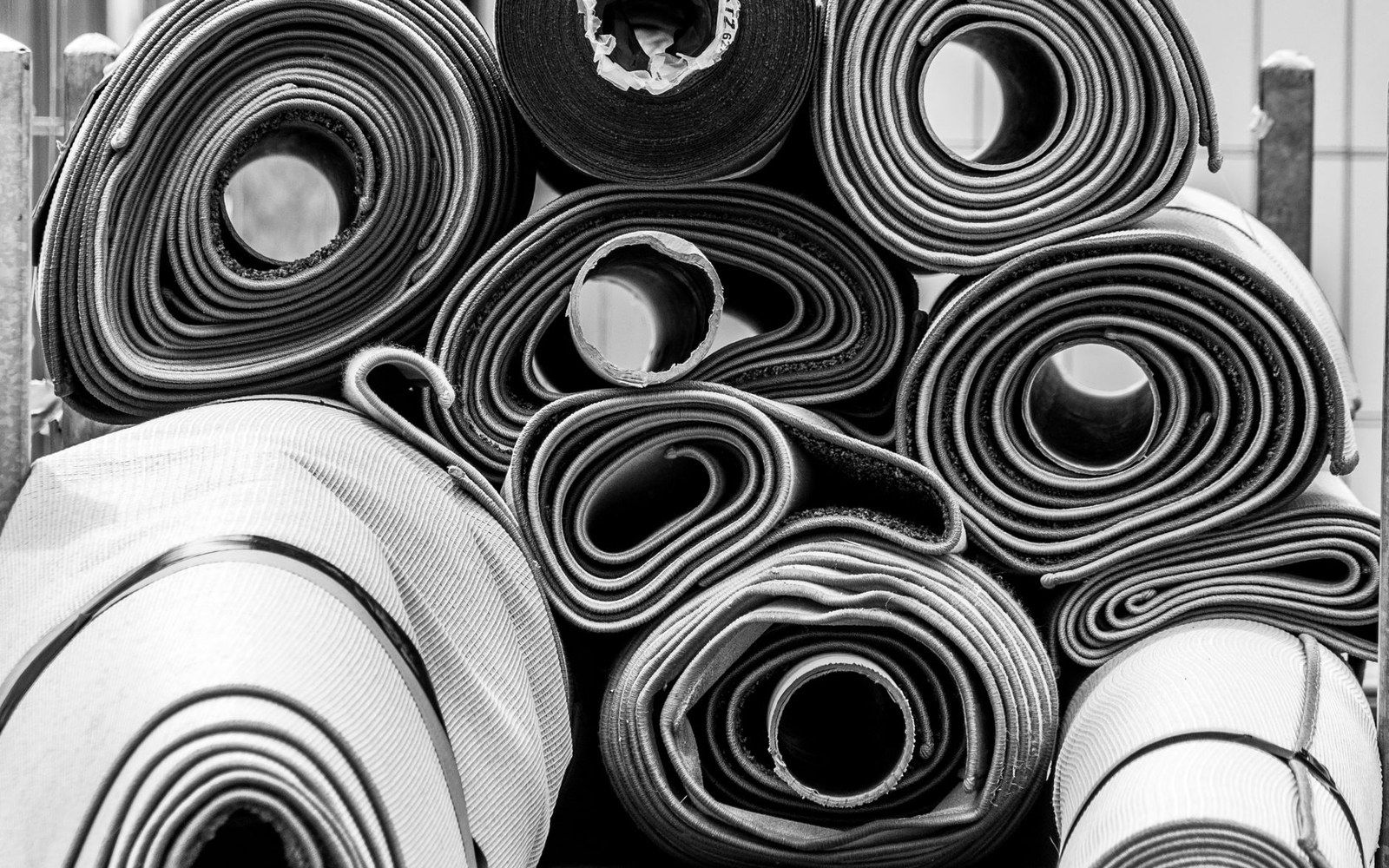
Roll stock bought against a forecast. On-demand production inverts the order — the cloth is committed after the style sells.
Photo: wal 172619 / PexelsFibre-to-fibre recycled polyester — taking old polyester garments and chemically depolymerising them back to usable feedstock — would close this loop but remains marginal in volume. The infrastructure exists in pilot form; it does not yet exist at scale. Textile Exchange's own reporting tracks the growth of recycled polyester as a share of total polyester production, but the dominant channel remains bottle-derived.
What the Certification Number Leaves Out
A brand reporting that its collection is "X per cent recycled polyester" is reporting a fact about input material, not about environmental outcome. The Ecodesign Regulation — Regulation (EU) 2024/1781, in force from 18 July 2024 — will require digital product passports that disclose durability, recyclability and material composition, and the European Commission has indicated that recycled-content claims will need substantiation within that framework. But the regulation's textile-specific implementing measures are still being developed, and no binding microfibre disclosure requirement is yet in force anywhere.
Fifty-four per cent is a production share, not a verdict. The number is where analysis has to start.
How the certifications stack up
- Recycled Claim Standard (RCS) — verifies recycled content present in a product; chain-of-custody model; administered by Textile Exchange
- Global Recycled Standard (GRS) — adds social and chemical requirements on top of recycled-content verification; same administrator
- Neither standard addresses microfibre shedding or end-of-life recyclability of the finished garment
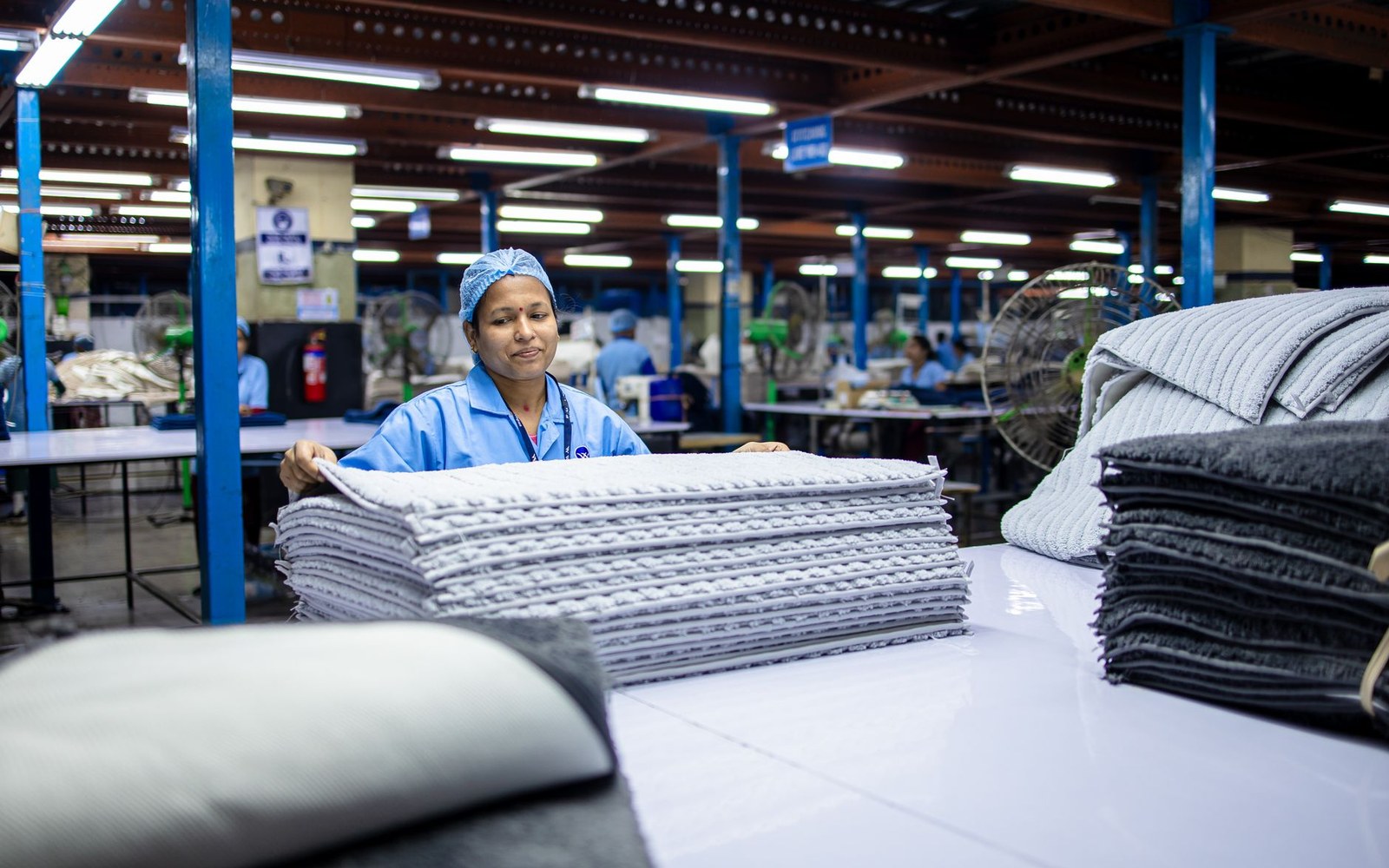
Grading is manual: reuse, recycling, refuse. Separate collection produces the stream; the sorting decides what it is worth.
Photo: EqualStock IN / Pexels