From the Accord to the International Accord
The legally binding safety agreement born from Rana Plaza has been renewed, expanded to Pakistan, and is still finding critical structural faults — more than a decade after the collapse that created it.
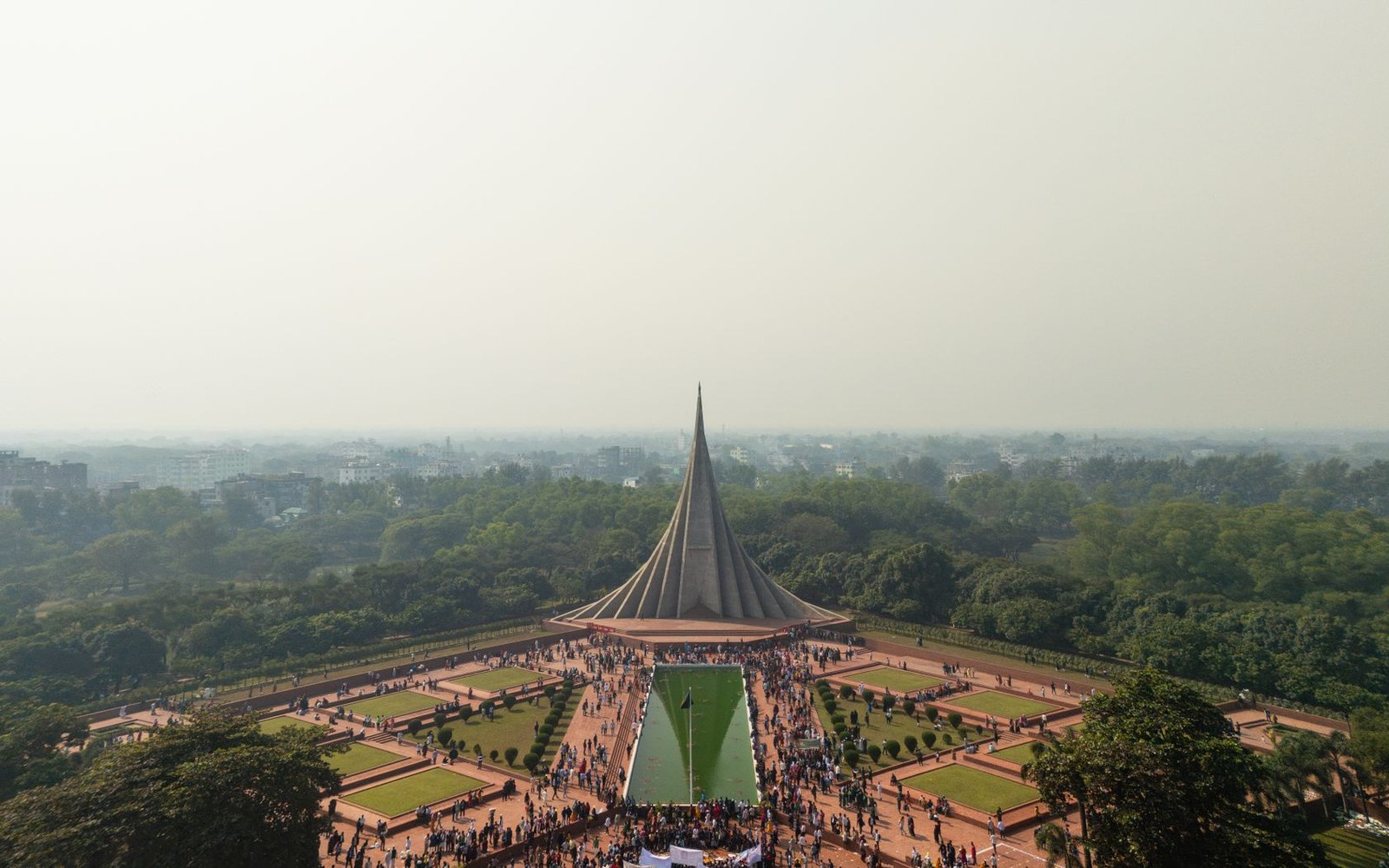
The 2013 Accord was succeeded in 2021 by the International Accord, since extended and now operating in Pakistan.
Photo: Somogro Bangladesh / PexelsWhat the 2013 Accord Was, and What It Was Not
On 24 April 2013 the Rana Plaza building in Savar, outside Dhaka, collapsed and killed 1,134 garment workers. Inspectors had identified cracks in the structure the day before; managers ordered workers inside regardless. The disaster triggered the Bangladesh Accord on Fire and Building Safety, signed that May and ultimately backed by more than 220 brands and retailers alongside global trade unions IndustriALL and UNI Global Union. The Accord was unusual in one specific way that mattered enormously: it was a legally binding contract, not a voluntary commitment, meaning signatory brands could be taken to arbitration if they failed to fund or cooperate with remediation.
The original instrument covered fire, electrical and structural safety in the export garment factories supplying its signatories in Bangladesh. It established an independent inspection secretariat, required suppliers to remediate identified hazards, and placed the financial obligation for doing so on the brands — not on the factories or their workers. By the time the initial five-year term ended in 2018, the Accord's programme had inspected more than 1,600 factories and produced a public remediation database, a model that had no direct precedent in global supply-chain governance.
The advertising ban reaches promotion, not the shelf.
Photo: Jahra Tasfia Reza / PexelsWhat the 2013 Accord was not: permanent, geographically broad, or unchallenged. The Bangladesh Garment Manufacturers and Exporters Association contested the agreement in local courts, and a 2018 Supreme Court of Bangladesh order required the secretariat to transfer operations to a local body, the Readymade Garment Sustainability Council. The Accord's international operations were moved to the Netherlands. The original instrument was extended twice in transition form, with a hard deadline effectively forcing negotiation of a replacement.
The International Accord, 2021 and After
The International Accord for Health and Safety in the Textile and Garment Industry was signed in September 2021. Structurally it preserved what had made the original effective — legal bindingness, independent inspection, brand-funded remediation — while making several substantive changes. The geographic scope was explicitly framed as expandable beyond Bangladesh from the outset; the mandate now runs through 31 August 2025, and the parties have signalled renewal discussions are underway.
Chronology
- September 2012 Ali Enterprises fire, Karachi; more than 250 killed April 2013Rana Plaza collapse; 1,134 workers killed
- May 2013Bangladesh Accord on Fire and Building Safety signed
- 2018Original Accord term ends; transition to Readymade Garment Sustainability Council; secretariat moves to Netherlands
- September 2021International Accord for Health and Safety in the Textile and Garment Industry signed
- 2023Pakistan programme launched; factory enrolment begins
- 31 August 2025Current International Accord mandate expiry; renewal discussions ongoing
The signatory count as of mid-2024 stood at more than 190 brands and retailers. The list includes major European high-street names and platform retailers, among them Zara's parent Inditex, ASOS, and a range of Scandinavian and German chains. LVMH and Kering — whose luxury supply chains are concentrated in Italy and France rather than South Asia — are not signatories, which reflects the Accord's sector-specific scope rather than a gap in the instrument itself. Notably absent are the largest ultra-fast-fashion operators: Shein has not signed, nor has Temu, whose asset-light model means it does not contract directly with factories in the same way as conventional brands.
The Pakistan extension, announced in 2023, represents the most significant structural change since the original Accord. Pakistan is one of the world's major apparel exporters, and its garment industry had seen its own catastrophic safety failures — most prominently the Ali Enterprises factory fire in Karachi in September 2012, which killed more than 250 workers just months before Rana Plaza and which had itself been certified compliant by a social-auditing firm days before the fire. The International Accord's Pakistan programme began enrolling factories in 2023, with initial inspections focused on fire and electrical safety in line with the Bangladesh phase-in sequence a decade earlier.
Barcode and QR stickers on an inbound parcel. The digital product passport has to carry more than this, and fit on the garment’s own label.
Photo: Kampus Production / PexelsWhat the Inspections Have Found
The International Accord's Bangladesh programme publishes factory-level inspection data and remediation progress through its online portal — one of the few instances of genuine supply-chain transparency in the industry, where the underlying data, not just an aggregate score, is public. The pattern of findings since 2021 follows a consistent shape: fire-safety items, particularly related to means of egress, alarm systems and fire suppression, show the highest rates of outstanding remediation among factories inspected for the first time. Structural issues, though fewer in frequency, remain present in factories entering the programme more than a decade after Rana Plaza established that building integrity was not a secondary concern.
The Accord's 2023 progress data, published by the International Accord secretariat, recorded that a substantial proportion of initial safety violations across newly enrolled or re-enrolled facilities involved blocked or inadequate fire exits — the same category of defect that has driven casualty counts in factory fires. This is not evidence that nothing changed in Bangladesh between 2013 and 2023; the factories that have been through full Accord remediation cycles show markedly better compliance rates. It is evidence that the universe of supplying factories is not static, and that new entrants — factories taken on by brands as sourcing shifts — arrive with the same baseline risks the programme was created to address.
The arbitration mechanism has been used. A 2021 case brought by IndustriALL against a signatory brand under the original Accord's extended terms resulted in a binding ruling. The International Accord preserves the same arbitration path, seated in the Permanent Court of Arbitration in The Hague, which distinguishes it from every voluntary social-audit framework that preceded and surrounds it.
Worker-complaint mechanisms form a third pillar alongside inspections and arbitration. The Accord's complaint process allows factory workers to raise safety concerns directly to the secretariat, bypassing factory management and brand sourcing teams. The volume of complaints received since 2021, and the response times, are reported in the secretariat's annual summaries — a level of procedural transparency that the social-auditing industry, badly damaged by the Ali Enterprises certification scandal, has not matched.
The unresolved question heading into renewal negotiations is scope. The Accord model is resource-intensive: it requires a permanent secretariat, trained inspectors operating independently of brands and factories, and legal infrastructure capable of supporting arbitration. Applying that model to garment-producing countries beyond Bangladesh and Pakistan — Cambodia, Vietnam, Ethiopia — would require either a significant expansion of brand financial contributions or a tiered approach in which the legally binding core is preserved but inspection depth varies by market. Neither option has been publicly agreed. What the decade since Rana Plaza has demonstrated is that the legally binding structure is not incidental to the Accord's record — it is the record.
What makes it binding
- Legal form: a contract between signatory brands and global trade unions IndustriALL and UNI Global Union
- Arbitration: seated at the Permanent Court of Arbitration, The Hague
- Financial obligation: remediation costs placed on signatory brands, not factories
- Complaint mechanism: workers may raise safety concerns directly to the secretariat
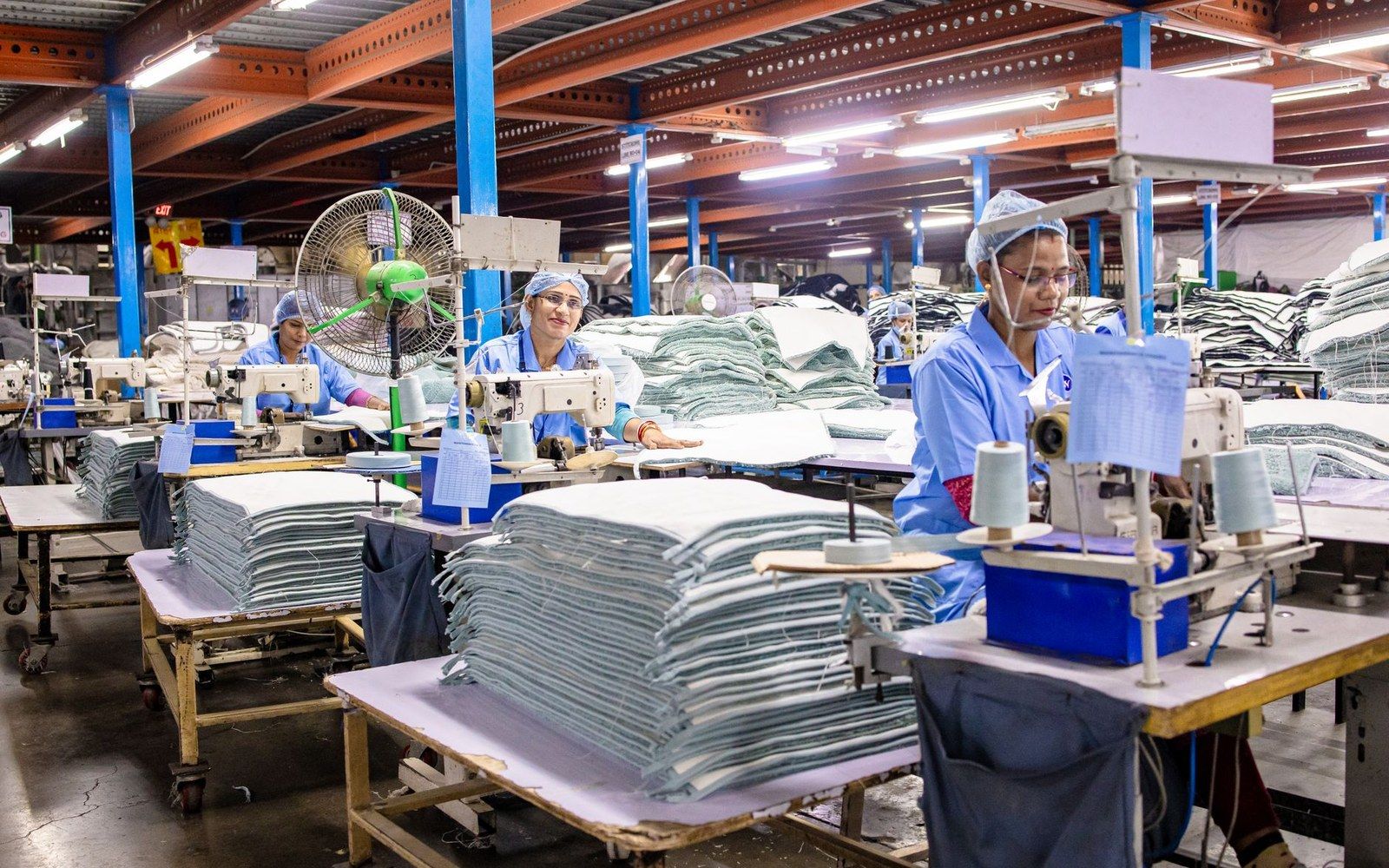
Assembly stitching at a garment unit. The frequency thresholds in the French text are written against the release cadence a floor like this can sustain.
Photo: EqualStock IN / Pexels