The Leicester Garment Quarter, 2020 and After
In 2020 a Sunday Times investigation found garment workers in Leicester factories supplying Boohoo paid below the minimum wage; the findings were subsequently examined by the Boohoo-commissioned Levitt review and by parliamentary inquiry. The piece reports the investigation and the Levitt findings, and what the successor audit arrangements required.

The 2020 investigation was followed by a commissioned review and, after it, a published audit programme.
Photo: Altaf Shah / PexelsA City, a Supply Chain, and a Sunday Morning
Leicester had been England's garment-manufacturing centre for the better part of a century before the pandemic made its factories front-page news. In July 2020, while much of the country's non-essential industry sat idle under Covid-19 restrictions, a Sunday Times investigation reported that workers in Leicester garment factories supplying Boohoo were being paid as little as £3.50 per hour — less than half the National Living Wage of £8.72 that applied at the time. The factories had not closed. The social-distancing rules that governed them were, according to the investigation, widely ignored. The piece landed like a lit match.
Boohoo's share price fell by more than 40 per cent in the days following publication. Institutional investors began publicly reviewing their holdings. Next, which had a wholesale relationship with Boohoo, suspended orders. ASOS delisted several Boohoo brands from its platform while it reviewed the situation. The reaction was unusual in its speed and its commercial force: a single piece of journalism produced consequences that years of campaigning had not.

A domestic machine and a bench: the cheapest intervention anywhere in the chain.
Photo: Gustavo Fring / PexelsLeicester's garment district was not a secret. The city holds a concentration of cut-and-sew factories that had, over several decades, come to serve the speed requirements of online fast-fashion retailers particularly well. Short runs, rapid reorders, domestic geography that eliminated the lead times of Bangladesh or Southeast Asia — these made Leicester factories structurally useful to brands that needed to get a new style live within days. That structural utility, the investigation implied, had also made it easy to look away from what was happening on the floor.
The Levitt Review
Boohoo responded by commissioning an independent review. Alison Levitt KC, a barrister, was appointed to lead it. The review, published in September 2020, did not exonerate the company. It found that Boohoo's supplier oversight was inadequate, that its ethical-trade auditing was insufficiently rigorous, and that the company had not taken reasonable steps to ensure minimum-wage compliance in its Leicester supply chain. It recommended a new framework of supplier registration, unannounced auditing, a wage-monitoring mechanism, and a dedicated compliance function within the business.
Chronology
- July 2020Sunday Times investigation published; Boohoo share price falls sharply
- September 2020Levitt review published, finding inadequate supplier oversight and auditing
- Late 2020BEIS Select Committee takes evidence on Leicester garment conditions
- 2020 onwardBoohoo Agenda for Change: supplier registration portal, unannounced audits, approved supplier list established
- 2022–23Ultra-fast fashion growth dominated by Shein's Chinese manufacturing base, reducing Leicester's competitive centrality
The Levitt review also found that Boohoo had relied on first-tier supplier declarations without robust downstream verification — a structural problem in garment supply chains more broadly, where subcontracting can move work several steps from the brand's direct sight. A factory registered as a Boohoo supplier might pass work to a smaller unit that the brand had never audited and, in some cases, never knowingly engaged. The review's language was careful but its findings were not equivocal: the systems in place before July 2020 were not fit for purpose.
Parliamentary attention followed. The Business, Energy and Industrial Strategy Committee took evidence in late 2020, examining conditions in Leicester's garment sector and the adequacy of existing enforcement mechanisms — including the powers of HMRC's National Minimum Wage enforcement unit and local authority environmental health teams. The committee's questions touched on whether the structural conditions enabling below-minimum-wage work in Leicester were peculiar to Boohoo's supply chain or symptomatic of an industry-wide audit failure. The evidence suggested the latter.
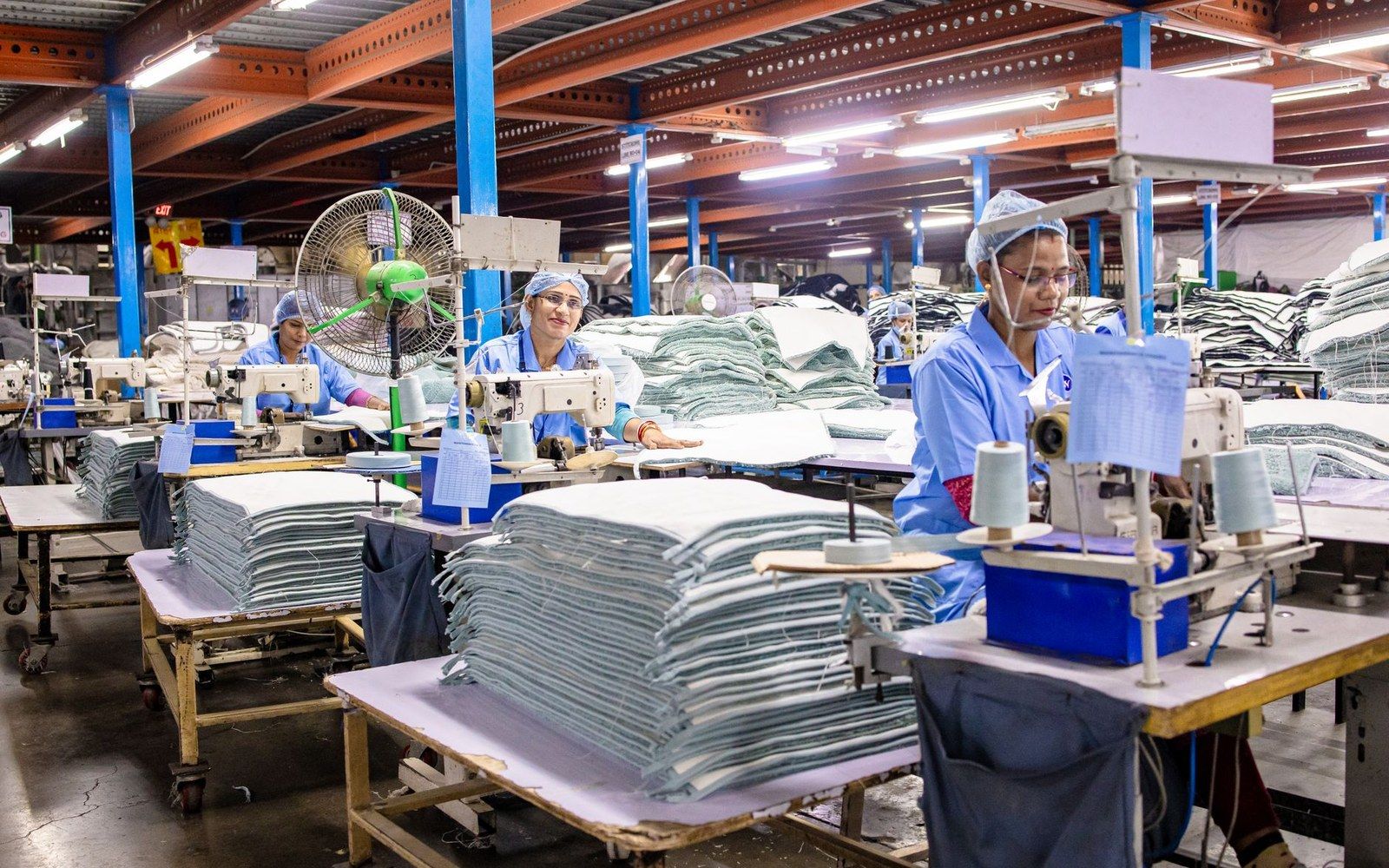
Assembly stitching at a garment unit. The frequency thresholds in the French text are written against the release cadence a floor like this can sustain.
Photo: EqualStock IN / PexelsWhat Changed, and What Was Already There
In the aftermath of the Levitt review, Boohoo committed to a set of successor arrangements it described as the Agenda for Change. These included a supplier registration portal requiring factories to disclose subcontracting relationships, a programme of unannounced audits conducted by a third-party firm, and a commitment to purchasing only from factories on an approved Leicester supplier list. The company also appointed a Head of Responsible Sourcing and established a board-level ESG committee to provide oversight.
The audit regime that Boohoo adopted leaned on third-party social compliance auditing — a model that already dominated ethical-trade verification across the garment industry. That model had critics before Leicester and acquired more afterward. The standard scheduled audit, conducted with advance notice, is a known quantity in the factories that receive it: workers may be briefed, records may be adjusted, and the visiting auditor works within a constrained time window. The Levitt review's recommendation of unannounced auditing addressed precisely this weakness, but unannounced audits are more expensive, more logistically demanding, and more likely to be resisted at the supplier level.
The broader regulatory context had not, in 2020, caught up with what the Leicester situation revealed. Extended producer responsibility frameworks for textiles were still years from implementation in the UK. No mandatory human rights due diligence law applied to UK-based fashion brands — the Modern Slavery Act 2015 required a transparency statement but imposed no obligation to act on what that statement disclosed, and carried no financial penalty for non-compliance. The gap between disclosure and accountability was, in Leicester's case, precisely the gap through which the conditions described by the Sunday Times had developed.
HMRC's National Minimum Wage enforcement data — published annually — had not, in the years before 2020, produced visible enforcement action against garment-sector employers in Leicester at a scale commensurate with what the investigation found. Whether that reflected limited enforcement resource, operational difficulty in auditing informal sub-contractors, or both, the published record did not resolve. What it demonstrated was that self-regulatory systems and state enforcement, operating in parallel, had not closed the gap.
Leicester's Position Since 2020
The immediate post-2020 period saw some shift in Leicester's supply-chain position. Several brands publicly committed to reducing or eliminating sourcing from unregistered Leicester factories. The reputational damage to fast-fashion domestic sourcing as a model — which had previously been marketed partly as a transparency advantage over offshore production — was substantial and, in some quarters, lasting.
By 2022 and 2023, the dominant trend in ultra-fast fashion had moved in a direction that made the Leicester model less central: Shein's on-demand micro-batch production, executed overwhelmingly through Chinese manufacturing, represented a logistical and cost proposition that domestic UK production could not match. The competitive pressure on Leicester factories that had made wage compression attractive did not ease; the source of that pressure simply shifted geography.
For the workers in Leicester's garment quarter, the structural conditions identified in 2020 — informal employment relationships, payment by the piece rather than the hour, dependence on a small number of large buyers — were not dissolved by the Levitt review or the Agenda for Change. The Modern Slavery Act's transparency requirement did not mandate corrective action; it mandated reporting. And the companies best placed to exercise leverage over those conditions — the brands at the top of the supply chain — remained, as Levitt found, structurally inclined to look one step down and no further.
What the Leicester episode produced, concretely, was a well-documented account of how a domestic supply chain can operate below legal minimum standards for long enough that its exposure, when it comes, reads as a surprise to everyone whose job it was not to be surprised. The documentation is in the Levitt report. The audit findings, the parliamentary record, the share price chart — all of it constitutes a case study in the distance between a brand's stated values and its operational systems, measured in pounds per hour.
The gap the law left open
- Modern Slavery Act 2015: required a transparency statement from qualifying companies; imposed no duty to act on findings and carried no financial penalty for non-compliance
- National Minimum Wage enforcement (HMRC): published annually; pre-2020 record showed no enforcement action at scale against Leicester garment sub-contractors
- Extended producer responsibility for textiles: not yet in force in the UK at the time of the investigation
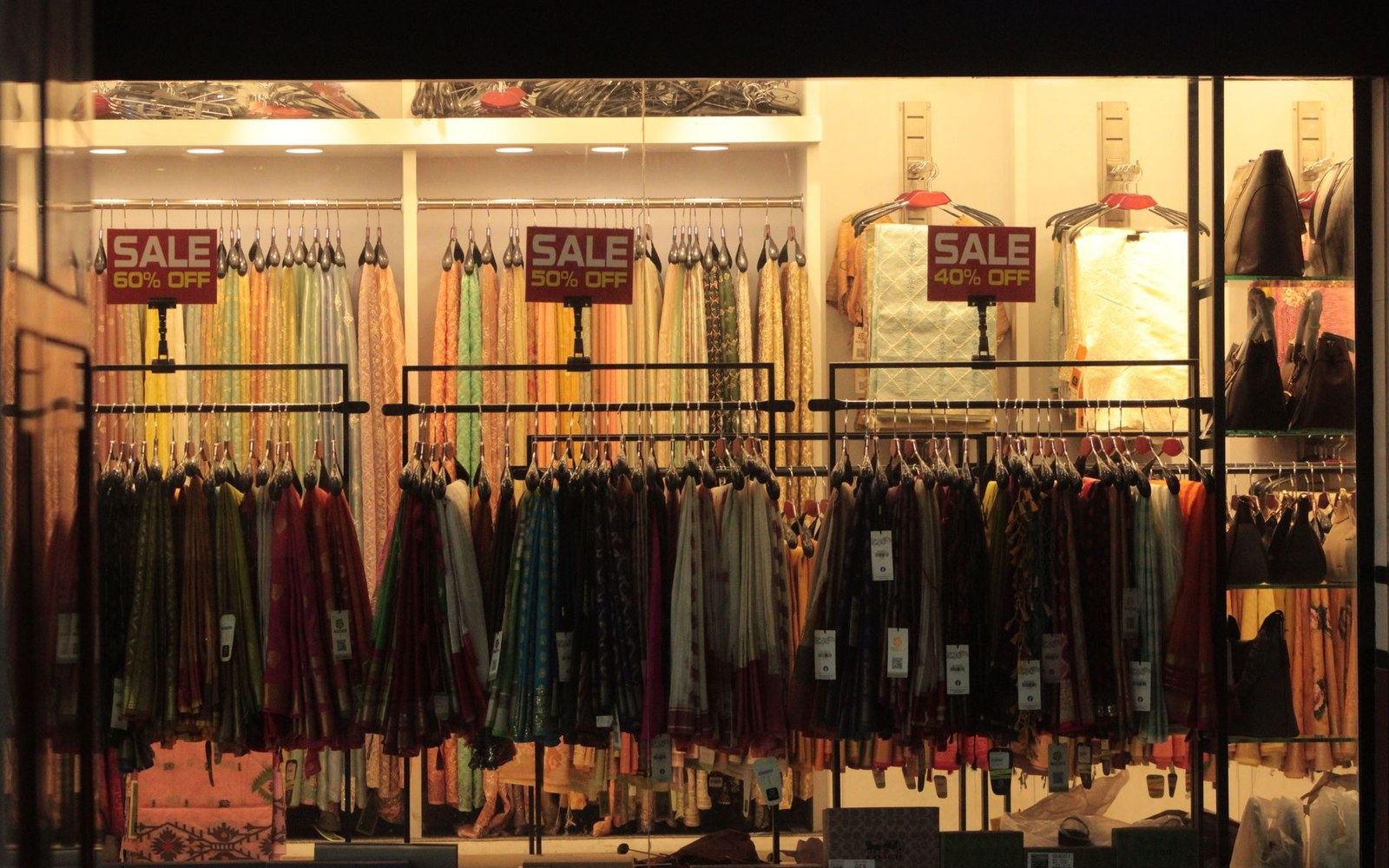
The advertising ban reaches promotion, not the shelf.
Photo: Jahra Tasfia Reza / Pexels